Ritu Tyagi
Ritu Tyagi
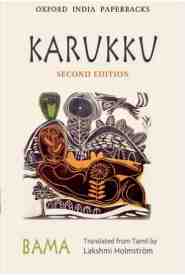
Narration and Feminism in Bama's Karukku and Sangati
In her book Writing beyond the Ending, Rachel Blau Duplessis explains the close link between narrative and ideology:
Narrative in the most general terms is a version of, or a special expression of ideology: representations by which we construct and accept values and institutions [...]. Narrative structures are like working apparatuses of ideology, factories for the ‘natural’ and ‘fantastic’ meanings by which we live. (3)
Narratives are closely related to our perceptions of reality as they contribute enormously in reflecting on, constructing and reinforcing our socio-cultural beliefs.
In androcentric societies particularly where both languages and literatures are thoroughly influenced by dominant patriarchal ideologies, the narratives constructed within or representing these societies are undoubtedly geared towards expressing dominant, gendered attitudes toward women, family, and sexuality, imposing an image of passivity and submission on women. By representing women in a manner that entraps them in stereotypical definitions, forcing them to adhere to specific roles assigned to them by the society, these narratives have alienated them, and constantly suppressed women’s expression as well as experience.
The greatest challenge for women writers, then, is to be able to express their concerns and experiences within the constraints of a language that itself has estranged them by stifling their voices. Many feminist critics—such as Rachel Blau Duplessis, Susan Lanser, and Alison Case—propose that the only possible way to liberate the feminine voice is a complete rupture from this dominant androcentric narrative. Women writers cannot express themselves within the framework of a dominant narrative, as it is this very structure that controls and suppresses them. The only way women can make their voices heard is by breaking away from the traditional narrative.
Drawing upon the notions of feminist narratology and intersectional feminism this article proposes to read the autobiographical accounts Karukku and Sangati by Bama, a noted Dalit woman writer in order to explore various narrative strategies in form and content that allow their marginalized narrators to intervene in the dominant structures of narrative construction, and thereby liberate narrative from the shackles of “master’s tools,”1 as well as create their own niche. This niche then becomes the interstitial space from where they recount their experiences. This article argues that Bama takes an intersectional approach to understand gender in relation with caste and class and in so doing presents a critique not only of the Dalit narratives that are often accused of having alienated Dalit women but also of the canonical theories in Western and Indian feminism.
Bama is today one of the most distinguished Dalit woman writers in Tamil. She has published many works, an autobiography, Karukku (1992), a novel, Sangati published in 1994 followed by a collection of short stories in 1996 and another novel Vanman in 2002. Two more anthologies of short stories followed shortly Oru Thathavum Erumayum in 2003 and Kondattam in 2009. Her seminal works, Karukku and Sangati, have attracted a lot of attention from the intellectual community and have been translated into many foreign as well as regional languages. Karukku, an autobiographical account of Bama’s life takes the reader through the trials and tribulations of a Dalit woman who struggles both within the paraiyar community to which she belongs and fights at the same time against the hegemonic control of the upper castes as well as the Christian order that she ends up joining with the intention of helping the poor Dalit children. The work presents a scathing critique of patriarchy and caste system in India. It also reflects strongly on the hypocrisy and corruption within institutionalized Chrisitianity, and in this way opens itself up to a plethora of issues faced by the Dalit community particularly the women.
The second work, Sangati which is promoted as a novel is also autobiographical in nature but its structure and style are such that the narrative swiftly shifts from the individual struggle to the perception of a larger community through incorporation of numerous stories from neighbors, friends and relatives, thereby becoming, according to Lakshmi Holmström, “the autobiography of a community.”
Both Karukku and Sangati are inspired by personalized accounts but also attempt to create an aesthetics that allows the individual to merge with the collective, thereby articulating not simply personal stories but by way of the personal attempt to voice the treatment meted out to the Dalit community, particularly the women. Bama herself foregrounds the collective aspect of the work in an interview as she states: “The story told in Karukku was not my story alone. It was the depiction of a collective trauma of my community-whose length cannot be measured in time.”2 Explaining the importance of the term Karukku in the preface, Bama observes many similarities between her life full of trials and tribulations and the saw-edged palmyra karukku. She introduces the book stating that “the driving force that shaped this book are many: the events that occurred during many stages of my life” but swiftly shifts her focus to the “other Dalit hearts like mine. […]. They, who have been the oppressed, are now themselves like the double-edged karukku, challenging their oppressors” (xiii), thereby reinforcing what Pramod Nayar remarks in his article, “Karukku for her is both the title of her personal autobiography and an account of the whole community” (85).
The reader can clearly discern an interesting interplay of personal pronouns in the text as the narrative voice shifts repeatedly between I and we. The first chapter itself begins with a detailed description of the topography of the narrator’s village but no personal detail about the narrator herself: “Our village is very beautiful. […] most of our people are agricultural laborers” (1) coupled with the cultural beliefs and mythological stories related to the place such as the story of Bondan-Mamma, Ayyangchi troupe, a group of peys (ghosts) who would play pranks on the villagers, the story of nallathangaal etc. The narrator attempts to locate the space of her village within its socio- cultural framework.
The first “I” of the narrator, however, appears at the very beginning of the second chapter. This chapter, however, is divided into two parts. The first one presents the details of the narrator’s personal experiences, but the second seems to divert from the protagonist to the community and presents itself as a plea for social reform: “Are Dalits not human beings? Do they not have common sense? […]. What do we lack? They treat us in whatever way they choose, as if we were slaves who do not even possess human dignity” (Bama, 2012, 27).
The book announces a complete rupture from the norms of a conventional autobiography, as instead of privileging a chronologically linear temporal framework based on the timeline of events in the narrator’s personal life, this work arranges events according to themes such as work, games, education etc, thereby allowing the narrator to reflect on the events. Nayar also remarks that Bama moves from the individual to the collective by expanding her identity-herself into the world: “She opens chapter two with ‘when I was studying in the third class’ [...] by relentless narrative logic of a testimonio she moves into the “we” and concludes the second section thus ‘We who sleep must open our eyes and look around us. We must not accept the injustice of our enslavement … we must dare to stand up’” (86).
If Karukku attempts to play with the narrative conventions through its form in order to voice the collective concerns of the Dalits and the women, the second novel Sangati moves from the story of an individual struggle towards the perception of a community of paraiya women in a more overt manner. Foregrounding the polyphony and multiplicity of the narrative voices, Bama states her intentions in the acknowledgements: “My mind is crowded with many anecdotes: stories not only about the sorrows and tears of Dalit women, but also about their lively and rebellious culture; their eagerness not to let life crush or shatter them […] about the self-confidence and self-respect that enables them to leap over their adversaries. […]. I wanted to shout out these stories” (ix). With no coherent plot line, Sangati challenges many conventional notions of a novel and an autobiography. The title ‘Sangati’ itself means events, news, happening. The narrative voice is taken over time and again by other characters and the book presents itself as a collection of individual stories, anecdotes, memories narrated in the first person. It is the grandmother of the narrator who tends to recount many tales. These stories of the narrator’s friends and relatives are coupled with the mythological tales from the past. The first-person narration is counterpointed by the reflections of grandmother and the narrator herself. Holmström, in the introduction, explains how this extraordinary form of the novel allows for “reflections –which may seem didactic and become a means of bridging experience and analysis, and end for a practical call for action. The form of each chapter is therefore explanatory, and the structure of the book as a whole seeks to create a Dalit-feminist perspective.” (xvi)
The novels, Karukku and Sangati draw on the personal and the individual to call the attention of the reader to the collective sufferings of the Dalit community particularly the Dalit women, and this is precisely why they can be better understood as autoethnographies. Carolyn Ellis defines an autoethnography as writing or a story that connects the personal to the cultural, social and political. She also states that autoethnographic forms feature concrete action, emotion, embodiment, self-consciousness and introspection (xix). The autobiographer herself becomes the ethnographer who is at once the observer and the observed, thus providing a first-hand experience of the social and political situations. Bama who has been a well-known Dalit activist provides a unique account of the atrocities and domination faced not only by the Dalit community but focuses particularly on the Dalit women who undergo multiple oppressions. It is precisely this autoethnographic approach that allows Bama to comprehend that it is not simply patriarchy that is the sole reason of distress for the womenfolk in her village. She begins to understand the role that caste and class play and explore the intersectional nature of oppression when it comes to Dalit women. Through many interconnected anecdotes and stories where the myth meets the reality, Bama provides an intriguing insight into the matrix of domination to which Dalit women are subjected, as they are located at the very end of the hierarchical ladder.
Intersectionality as a theory proposes to understand various aspects of our lives such as class, race, sexual orientation and gender, not as independent entities, separate from each other, but as an intricately interwoven network of relations that are essential for the complete understanding of a given condition. According to this notion, all aspects of one's identity need to be examined simultaneously, in interaction with each other, as varied forms of oppression are always interrelated, creating a matrix of oppression that reflects the intersection of multiple forms of discrimination. Law and policymakers tend to focus only on one kind of marginalization in a way that the overlapping of various aspects leading up to the oppression is easily overlooked. The term coined by the American feminist legal scholar, critical race theorist and civil rights advocate Kimberlé Williams Crenshaw is historically related to the notion of feminism. Intersectional feminism attempts to understand women issues not only in terms of patriarchy but also consider other facets such as caste, religion and class that intersect with gender in order to create a matrix of domination. This approach is particularly useful to study Dalit women who occupy the lowest rung in the society.
Bama’s works efficiently unravel the mechanisms of power at work within the Dalit households and outside that subjugate women and relegate them to a deplorable state. Discriminated since birth, the girls are never taken care in the families that tend to focus only on the male child, as he would grow up to feed the parents, unlike the girl child, who would be sent off to take care of another family. Young girls are often expected to help out their mothers in household chores, as their mothers work outside. Consequently, sending them to school is seldom the priority of their parents. Even the games they play at home are gendered – Kabaddi and marbles for boys whereas girls content themselves with cooking, cleaning and household activities. The gendered division of roles is perpetuated through the games early on. Once the girls reach their maturity they are considered as burdens for the family and are supposed to be married off as soon as possible.
Marriage does not offer any respite to these girls who were already treated as second-class citizens by their parents. The married girls do have the liberty to step out of the domestic space of a house and look for work outside in order to earn for the family, a privilege categorically denied to many upper-caste women within the Hindu system. This economic freedom of the lower-caste women, however, is devalued by their husbands who abuse them physically on regular basis. The narrator’s grandmother sums up the plight of Dalit women who work outside, “We have to labor in the fields as hard as men, their work ends when they’ve finished in the fields. […]. Born as women, what good do we get? We only toil in the fields and in the home until our vaginas shrivel.” (Bama, 2008, 6-7). Bama laments the fact that the Dalit men, imitating their upper-caste counterparts, come to impose the same patriarchal norms that are prevalent within the upper-caste communities in a manner that Dalit women are disadvantaged in multiple ways. Unlike upper-caste women, they might not be confined to the space of the house and have the liberty to move around mainly in search of work. It, however, becomes detrimental as they face sexual harassment at the hands of upper-caste landowners who view them as easy prey. These women are helpless and choose not to react, as they have to ask the same men for work, the next day.
Mariamma, a young woman is assaulted by Kumarasami, an upper-caste man. In order to hide the incident, he accused Mariamma of having illicit relations with another boy from a lower-caste. When both are called to present themselves in front of the village elders the girl is shamed in front of all the men, hit brutally by her father and asked to pay much more than the boy as a penalty. This incident has a long-lasting effect on the life of the girl who is later forced to marry the same alcoholic boy who had been rejected by many other women. Consequently, she faces domestic violence on daily basis. Anandita Pan also observes that this incident proves that “the lower-caste women’s sexuality becomes accessible because they participate in social labor. Such act also becomes a way to undermine the masculinity of the lower-caste men” (6). This demonstrates how women’s participation in social labor can be emancipating and oppressive at the same time due to the interlinking politics of caste, class and gender. Pan explains that at the “intersection of patriarchies, gender ideologies, and caste is therefore the figure of Dalit women that becomes the site where multiple structures perform their oppression and domination” (7).
Within this intertwining network of discrimination based on caste, religion, class and gender, Bama feels no sense of solidarity with the upper-caste women who do not hesitate to “other” their Dalit counterparts: “Besides all this, upper-caste women show us no pity or kindness either, if only as women to women, but treat us with contempt, as if we are creatures of a different species, who have no sense of honor or self-respect.” (Bama, 2008, 66). Although the upper-caste women do enjoy a position of privilege in relation to the Dalit ones, Bama believes that their lives are much more miserable than those of the lower-caste women. “They themselves lead lives shut up inside their houses, eating, gossiping, and doing their husband’s bidding, and then they treat us like this” (66). Criticizing the economic dependence of the upper-caste women who are confined to home most of the time, Bama opines that they have no identity of their own and are therefore unable to help the lower-caste women: “They submit to their husbands like cobras shrink back into their boxes. And they have to do that. Because it is the money that he gives her that drives the cart. It’s because of this that she even stands and sits according to his orders” (67).
On the other hand, Bama celebrates the circumstantial economic independence of lower-caste women who enjoy the liberty of earning this own money and making certain decisions in the family on their own. She believes that they do enjoy some advantages over their upper-caste counterparts because they do not have the system of dowry. On the contrary, it is the boy’s family that gives money and gifts to the family of the girl. Women are allowed to remarry after the death of their husbands, unlike Brahmin widows who end up in a pitiable state. In the politics of discrimination where caste, class, and religion intersect gender is no more an aspect that can bring “all” the women together. Bama questions the universality of the feminist concerns that consider women as a singular stable entity and advises Dalit women to understand the multiplicity of the oppression they face by many, thereby calling them to stand for themselves: “We must stand up for ourselves and declare that we too are human beings like everyone else. If we believe that someone else is going to come and uplift us, then we are doomed to remain where we are, forever” (66).
In his article “Dalit Women Write Differently,” Gopal Guru rightly explains how Dalit women face exclusion not only in the political and economic aspects but also on the cultural front at the hands of the Dalit male writers who have failed to recognize the problems Dalit women face and appreciate the literary output by Dalit women writers. In Dalit male writings, women are portrayed as submissive victims who never come to occupy important subject positions. He, therefore, makes a case for the women writers to write differently in order to voice their concerns. He, like many other scholars, believes that gender positioning is as important as caste and class identity in order to decide the validity of an event precisely because Dalit men reproduce the same patriarchal strategies that are at work in the upper-caste adversaries. One notices that Dalit women are alienated not only by the upper-caste women but also by their own men and therefore there is a need for an identity-based politics for Dalit women, an aesthetics of Dalit feminism that stands independent of the Dalit movement as well as the mainstream Indian feminism.
Bama’s narratives that recount stories from daily lives, mythology, folktales in a language pertinent to the milieu of the lower-caste women present many strategies for survival, critiques Brahmanical patriarchy as the principal mode of domination exercised even by Dalit men and upper-caste women, thereby attempting to give rise to an ideology specific to their own cause. Sharmila Rege calls it the Dalit Feminist standpoint and explains its importance: “The Dalit Feminist standpoint is about historically locating how all our identities are not equally powerful, and about reviewing how in different historical practices similarities between women have been ignored in an effort to underline caste-class identities, or at other times differences ignored for the “feminist cause”3
The social and historical locatedness of the experiences presented by Bama is particularly emancipating. Being at the lowest end of the hierarchical structure Dalit women have the privileged position to observe and analyze how power relations operate between the upper and the lower-caste societies as well as the power strategies operational within these groups. Varied aspects of our lives intervene in determining the positions of power or submission one acquires in different circumstances. This knowledge evokes a certain sense of consciousness and comes to confer a sentiment of agency. It also allows us to rethink our understanding of “women” as a stable entity, making us aware of the power dynamics that operates within different groups of women.
Bama’s narratives then are not simply accounts of suffering and trauma presenting women as victims, but her writings through various strategies attempt to engage with the problems of Dalit women in order to reflect on and question the subjugation they undergo. Her work challenges the literary conventions of genre, autobiography and fiction in order to create interstitial spaces from where to voice the concerns of the most marginalized group of people, to create an aesthetics of literature that allows for new positions of subjectivities to emerge that are capable of changing the narrated world itself. It resonates with Susan Lanser’s notion of plotless feminine text characterized by a certain stasis, polyphony, and multiple consciousnesses, instead of a single unified consciousness. In the feminine world, where domesticity, inaction, and despair reign, the only predominant need is to communicate one’s story of suffering. Lanser’s plotless text is one where:
The act of writing becomes the fulfillment of desire, telling becomes the single predicated act, as if to tell were in itself to resolve, to provide closure. Communication, understanding, and being understood, become not only the objective of the narration but the act that can transform (some aspect of) the narrated world. In a universe where waiting, inaction, reception predominate, and action is only minimally possible, the narrative act itself becomes the source of possibility (357).
Bama’s writings, too, are a ferocious call for action and urge the Dalit women to take their destiny in their own hands, “Even the ocean will support us, if we only dare” (Bama, 2008, 67). She encourages the women to forego all fears even that of death and march forward for their emancipation, “If we stand for ourselves without caring whether we die or survive, they’ll creep away with their tails between their legs” (66). In the preface of her novel, she even acknowledges the power her narrative exercises on her, “Sangati, which has as its theme the growth, decline, culture, and liveliness of Dalit women, changed me as well. Even in times of trouble, boredom, depression, the urge grew to demolish the troubles and to live happily. To bounce like a ball that has been hit became my deepest desire, and not to curl up and collapse because of the blow” (vii).
Bama’s narratives cannot be read simply as autobiographic accounts that attempt to recount horrifying tales of subjugation and oppression that Dalit women undergo on daily basis. They are testimonies marked by an incessant desire to communicate their sufferings in order to be understood. Her writing then is an act of resistance and rebellion with an undying resolve at its center to emancipate her Dalit compatriots.
Works Cited
Bama. Karukku. Trans. Lakshmi Holmstorm. Ed. Minni Krishnan. Second Edition. New Delhi: Oxford University Press, 2012.
---. Sangati. Trans. Lakshmi Holmstorm. Ed. Minni Krishnan. New Delhi: Oxford India Paperbacks, 2008.
DuPlessis, Rachel Blau. Writing beyond the Ending: Narrative Strategies of Twentieth-Century Women Writers. Bloomington: Indiana University Press, 1985.
Ellis, Carolyn. Ethnographic I: A Methodological Novel About Autoethngraphy. CA: Altamira Press-Rowman & Littlefield, 2004.
Guru, Gopal. “Dalit Women Talk Differently.” Economic and Political Weekly 30 no. 41/42 (1995) : 2548-2550.
Lanser, Susan Sniader. “Toward a Feminist Narratology.” Style 20 (1986): 341- 363.
Nayar, Pramod. “Bama’s Karukku: Dalit Autobiography as Testimonio.” Journal of Commonwealth Literature 41-2 (2006): 83-100
Pan, Anandita. “Now the Powerless Speaks: A Study of Bama's Sangati and Baby Kamble’s 'The Prisons We Broke' From a Dalit Feminist Standpoint.” The Asian Conference on Asian Studies, June 14, 2015: Official Conference Proceedings, 2015.
Notes
1 A term borrowed from Audre Lorde’s essay “Master’s Tools Cannot Dismantle Master’s House.”
2 “Recognition for the Language of my people is the biggest award I can win,”
Interview, 26 April 2001. http://www.ambedkar.org/entertainment/RecognitionFor.htm. Accessed 21 January 2018. )
3 Quoted in Introduction of Sangati by Lakshmi Holmstrom, p. xvii.

Issue 78 (Mar-Apr 2018)
-
Interviews
- Kalpana H: In Discussion with C S Lakshmi
- Rachana Pandey: In Conversation with Manjula Padmanabhan
-
Articles
- Chandra N: Illegitimate Pregnancies in Select Tamil Movies
- Chinmaya Lal Thakur: Intersectional Feminism of Kamaladevi Chattopadhyay
- Dhanya S: Negotiating Gender and Disability in Ancient Promises
- Kalpana R J: Indian Feminism Today
- Koyel Chanda: Middle class respectability in Suchitra’s Dahan
- Lahari Behera: A Study of Salma’s The Hour Past Midnight
- Manika Arora: Desire, Procreativity, Violence in Poems of Sujata Bhatt
- Oindri Roy: Personalized Narratives in Amrita Pritam’s and Bama’s works
- Poonam Singh: Women in Hindi Dalit Autobiographies
- Praggnaparamita Biswas: Street-Theatre and Indian Feminist Theatre
- Rachel Bari N: Roy’s The Ministry of Utmost Happiness
- Ritu Tyagi: Narration and Feminism in Bama’s Works
- Shishu Bala & Suman Sigroha: Anita Nair’s Mistress
- Shruti Sareen: Class & Gender in Indian Women’s Poetry in English
- Sowmya T & Christina Rebecca S: A Reading of Divakaruni’s The Palace of Illusions
- Umesh Kumar: Concerns for Feminism in Shivmurti’s Triya Charittar
-
Poetry
- Albertina Almeida: Yes, No and Maybe
- Amanda Basaiawmoit: On Being a Khatduh and other poems
- Annapurna Sharma A: Mannequin and other poems
- Indira B: Body Business and other poems
- Radhika Menon: Echoing Silence, and Suppressed Identity
- Rashmi Kumar: Gudiya or Batman?
- Editorial
- Editorial
- Editorial
- Editorial
- Editorial