Kalpana H
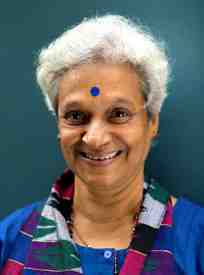
C S Lakshmi. Image credit- sparrowonline.org
C S Lakshmi (born in 1944) is popularly known by the pseudonym Ambai. She was born in Coimbatore and raised in Bombay and Bangalore. Ambai, completed her doctorate in American studies at New Delhi’s Indian School of International Studies which later became a part of Jawaharlal Nehru University. During the time of her research, she noted the difficulty of doing research on women and therefore, thought of creating archives that would document and preserve stories of, and by, women. One can check the website, www.sparrowonline.org for details. One can also view Lakshmi’s work related to the archives at
https://www.youtube.com/playlist? list=PLTxTDSSOEwjKbERlPDZZpjc6UzqVPzvZV . .
Lakshmi is an erudite, active scholar known for her intensely carved fiction written in Tamil. Some of her important works are Nandimalai Charalilae, Kaatil Oru Maan and Veetin mulaiyil oru camaiyalarai. Here Dr H Kalpana engages her in a discussion.
H Kalpana: What are your views on Feminism?
C S Lakshmi: I think that feminism is about living non-degraded lives and about living life on one’s own terms. It is an integral part of my life and I don’t see it as an academic concept outside my life to be studied or analysed.
HK: Do you think that there could be something like Indian Feminism.
CSL: Such a question would arise only for those who think that feminism is a concept or theory that has come from the west. I don’t think so. I feel that women asserting themselves in many ways and fighting for their dignity has been part of our culture.
HK: Why do most of your stories discuss women’s identities and rights?
CSL: Actually, they don’t! If you read all my stories you will know that my stories are about life and about women and men and about relationships. A few stories, while they talk about women’s lives, talk about how they perceive their lives and how they feel strongly about understanding their lives.
HK: Did you at any time feel in your own personal life discriminated.
CSL: Not in my personal life as a woman but as a writer like many other women writers I have also faced discrimination in the sense of being seen as being inferior to male writers.
HK: What is SPARROW and what is the work that it carries out?
CSL: SPARROW is the acronym for Sound & Picture Archives for Research on Women. It is an archives set up to document women’s life and women’s work in different formats like oral history, books, journals, newspaper material, private papers, oral history, art, theatre and visual resources like photographs and films.
HK: How do you feel digitalisation may help the cause of women?
CSL: Digitalisation is a technology that can be used for any purpose. Those who want to document women for a specific cause, struggle, or project can use the digitalisation method to spread information. But one should be aware that information can be digitalised to be downloaded; knowledge cannot be downloaded. I also cannot understand what you mean by cause of women. Which cause are you talking about or is there only one cause for all women? This is like saying “woman’s question” as if all women all over India or the world have only one question.
HK: Would you like to discuss a few women who you think inspired/motivated you?
CSL: I think many writers both Indian and western have added spice to my life. Women of my own family have given me the spirit to venture out and do things. But I have not been inspired by specific women I can name, and I have been motivated only by myself.
HK: Can you think how the present generation academics can make changes in terms of gender studies?
CSL: Gender Studies in universities has got caught in methodologies which are not wide ranged and there is a need to raise it above the level of surveys and dry information-based monographs and dissertations. There is also a need to root them in Indian languages and make it compulsory for a Women’s Studies scholar to master at least one Indian language which can be the mother tongue or any other language of choice in addition to one classical language. Translations of classical texts, and contemporary literature (both fiction and non-fiction) must be made a regular part of the syllabus.

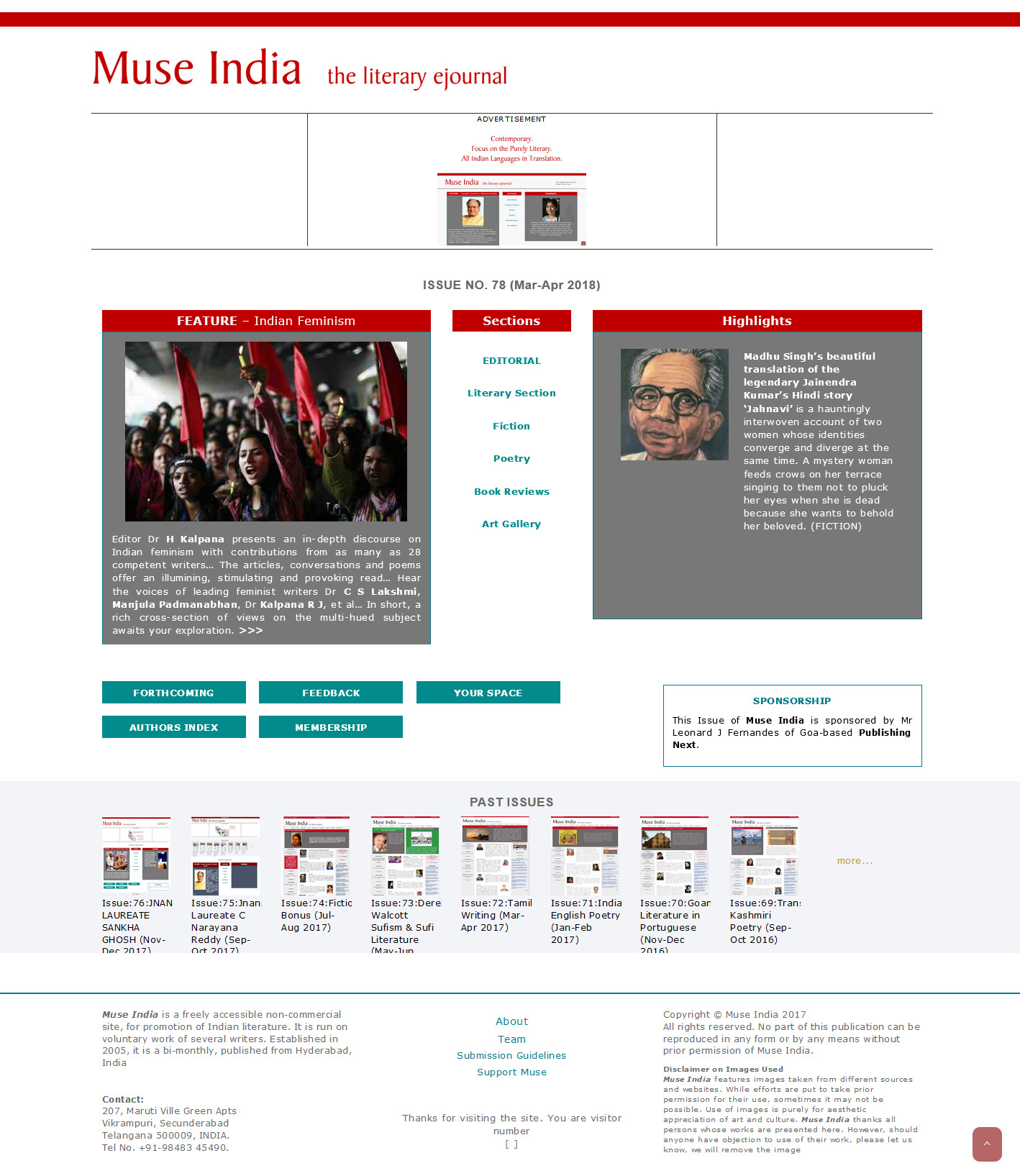
Issue 78 (Mar-Apr 2018)
-
Interviews
- Kalpana H: In Discussion with C S Lakshmi
- Rachana Pandey: In Conversation with Manjula Padmanabhan
-
Articles
- Chandra N: Illegitimate Pregnancies in Select Tamil Movies
- Chinmaya Lal Thakur: Intersectional Feminism of Kamaladevi Chattopadhyay
- Dhanya S: Negotiating Gender and Disability in Ancient Promises
- Kalpana R J: Indian Feminism Today
- Koyel Chanda: Middle class respectability in Suchitra’s Dahan
- Lahari Behera: A Study of Salma’s The Hour Past Midnight
- Manika Arora: Desire, Procreativity, Violence in Poems of Sujata Bhatt
- Oindri Roy: Personalized Narratives in Amrita Pritam’s and Bama’s works
- Poonam Singh: Women in Hindi Dalit Autobiographies
- Praggnaparamita Biswas: Street-Theatre and Indian Feminist Theatre
- Rachel Bari N: Roy’s The Ministry of Utmost Happiness
- Ritu Tyagi: Narration and Feminism in Bama’s Works
- Shishu Bala & Suman Sigroha: Anita Nair’s Mistress
- Shruti Sareen: Class & Gender in Indian Women’s Poetry in English
- Sowmya T & Christina Rebecca S: A Reading of Divakaruni’s The Palace of Illusions
- Umesh Kumar: Concerns for Feminism in Shivmurti’s Triya Charittar
-
Poetry
- Albertina Almeida: Yes, No and Maybe
- Amanda Basaiawmoit: On Being a Khatduh and other poems
- Annapurna Sharma A: Mannequin and other poems
- Indira B: Body Business and other poems
- Radhika Menon: Echoing Silence, and Suppressed Identity
- Rashmi Kumar: Gudiya or Batman?
- Editorial
- Editorial
- Editorial
- Editorial
- Editorial