Amita Basu
Amita Basu
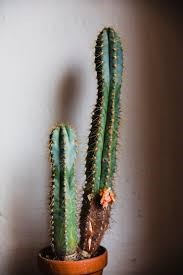
Image credit: freepik.com
Beyond the glass, sagging city buses and sleek SUVs raise dust clouds and drone like undead bees; in here, there’s only the hum of the air-conditioner. From the bedroom-turned-dressing-room, Pugsy barks, excited for playtime. Sukhi is bent over her broom, moving dining chairs out of the way and sweeping around towers of Amazon boxes, empty and full, all stacked together. It was nice sitting home all these months, getting paid without working, but then her joints got stiff and her conscience heavy, for all her neighbours lost their jobs weeks into lockdown.
Sukhi straightens up too quickly. The giddiness that’s hovered behind the 48-year-old’s forehead all morning sweeps her up into a storm. She clutches the granite countertop to keep from falling. Inside her sudden darkness, the thunder of an alien rage rumbles. She longs to shred the broom, smash up the kitchen and fling herself banshee-shrieking through the balcony’s glass doors. Mechanically, Sukhi reaches for the solution – another slice of white bread heaped with Kissan mixed-fruit jam. She chews quickly, eyes on the door of the dressing–room, where her employers are preparing for their weekend. Her vision clears. Gratefully, sunflower-like, she raises her face to God.
Sukhi has always been famous for two things: a sweet tooth and a sweet temper. But these black storms are coming often now. What if they cost her her job? She bends slowly over her broom again. Pugsy waddles out, licking his chops. Sana-mam has re-retied the blue-and-white bow around his throat. Sukhi offers the squash-face the remnants of her jam and bread. For surely the vet is mistaken: how can Pugsy be allergic to anything when thousands of street dogs thrive on garbage? Pugsy sniffs Sukhi’s offering and recoils.
The smell tickles his nose and itches his skull. He shakes his head, trying to shake it out. He sneezes and chokes. Look at this woman, trying to choke him to death! He waddles backwards, growling. She laughs at him. How heartless! Just wait till he tells Mom and Dad about his intruder with her sneeze-making, poisoned food and her guffawing. He barks for his parents. They don’t come. With a final growl over his shoulder, he trots back to the morning-room.
“Ammamma!” Titli shrills from the sofa. “Look, tiger!”
Sukhi goes to stand behind the sofa. Her granddaughter likes coming over here, and the Vermas don’t mind. On the huge television screen, some villagers are telling the NDTV correspondent that droughts, floods, and rock-bottom prices drove them out of rice farming, and now the Forestry Department is driving them out of goat herding. Sweat streams down the villagers’ faces. Their eyes confront the camera, bright and opaque, like the eyes of wolves. Their clay-brown skin is stretched drum-tight over skulls too big for their bodies.
“They showed tiger,” six-year-old Titli insists, appropriating the brown-and-white stuffed rabbit, Sana-mam’s childhood companion, now shabby and perched on the side table beside the mauve satin sofa. “Tiger was hungry.”
Sukhi pats Titli’s head. On weekdays, when she picks Titli up from school and they’re alone here, Titli wanders around the Vermas’ condo, sounding out the English words on snack packs and video-game cases. Sukhi, who struggles to make out the instructions Sana-mam leaves her in large all-caps on the fridge whiteboard, listens as Titli reads out the English headlines rushing across the television screen. Sukhi swells with pride. She doesn’t know that Titli’s reading out nonsense, that Titli’s English lessons have only got to ABC.
A forest guard defends government policy to the NDTV correspondent. It’s his job, he says, to keep all encroachers out of the Sunderbans. Next, a tiger appears in close-up. Titli squeals and points. The tiger stalks through marshy undergrowth, head lowered, neck flattened, flanks skinny. The camera pans, with dramatic jerks and soap-opera lightning flashes, to a herd of goats. Titli huddles up, clutching the limp rabbit between chest and chin. Sukhi strokes her granddaughter’s short, silky hair and resumes sweeping.
These emaciated villagers have stirred up the old terror inside Sukhi. She longs to sneak a motichur laddu from the red-and-gold box forgotten in the fridge. But Sana-mam emerges and wanders around the living room, dousing her snake-plants and succulents with that stinky new plant medicine that arrived by courier. ‘ORGANIC,’ read a label in English, hovering like a lone fly among the spiderwebs of foreign script sprawling all over the box. Sukhi bids her 30-year-old employer good afternoon, then sweeps past her with eyes lowered. What if Sana-mam smells her breath and threatens to lock the fridge, like when she caught Sukhi bolting rashmalai? Sukhi decides she’ll admit to the white bread but claim it was the super-expensive, sugar-free jam that she lathered on.
She lowers her face to hide her grin. It’s like she’s seven again, trying to persuade Amma it was a crow that stole the last Mysore pak.
Now Varun-sir emerges. These rich folk require hours to prepare for their Saturday, and all three bathrooms, with jars and bottles crowding the basins and stampeding the windowsills. But Sana-mam and Varun-sir always look the same, always in black. Varun-sir ruffles Titli’s hair. Titli’s watching unblinkingly for the reappearance of her starving tiger.
Varun-sir returns Sukhi’s full-toothed smile with his shy, lopsided grin. You’d never think he was a bigshot law partner: so humble. “Are you sure I can’t make you breakfast?” says Sukhi.
“No, thanks,” says Varun-sir, as if addressing one of his corporate colleagues. “We’re brunching with friends.”
He watches Sukhi nod side-to-side. He’s watched her sitting down suddenly when she thinks nobody’s looking. He’s watched her bright eyes dulling year by year and new planes and angles parsing her once moon-round face. Perhaps, he reflects, her cheerfulness is only the child of folly, of refusing to take seriously problems she thinks she can do nothing about. He admires her cheerfulness nonetheless. “How are you, Aunty? How was your checkup?” He speaks lightly, checking the urge to scold her preemptively.
Sukhi ducks her head. The Vermas earn fifty times her salary, but they call her ‘Aunty.’ If they heard about her collapsing on Friday after dinner and her daughter rushing her to the hospital and the doctor saying her blood sugar was 451, they’d tackle her here and now and give her the injection. Last month, after Sukhi emptied that box of jalebi in one morning, Sana-mam said that she’d bought a syringe and the next time Sukhi sneaked any sweet stuff, she’d hold her down and inject her with insulin. Sukhi giggled with terror.
Sana-mam had retorted, ‘You don’t believe me? You want to see the syringe?’
Eyes popping, about to lose bowel control, Sukhi had sworn she’d learned her lesson. She’s had three children and lost many relatives to alcoholism, and she’s still always smiling. So, nobody takes her blood-and-injection phobia seriously.
“Checkup fine-only, sir,” Sukhi answers Varun-sir. Then she begs him to let her sort through the Amazon boxes and bin the empty ones. She grins, proud for so deftly deflecting his attention from her so-called health problems when he, along with everyone else, dismisses her phobia as childish. Then she bites her tongue. She knows he means well. She knows she’s being foolish.
“Hmm.” Varun-sir scratches his chin. “We’ll have to sort through the boxes first and decide which ones to save for packing boxes.”
How big his finger joints look, and how his veins pop out of his arms! Sukhi’s grin disappears. The dumbbells and whey-protein-powder jars are piling up in Varun-sir’s room, but this boy’s getting so skinny. God knows when he’ll fade into thin air. He used to be so nice and plump, back in 2010, when she began working for the Vermas in their last flat but two. Sometimes, for no reason, you see someone as if for the first time. What unrequited need, she wonders, drives this boy to chisel his poor flesh into stone?
“So much dust the boxes are getting,” she pleads. “Very bad for your asthma!” It’s bad enough that her potbellied son and lame middle daughter are always nagging her about her blood sugar. She won’t listen to any more of this scarecrow’s health warnings.
“We’ll do it soon, I promise!” he says.
The Vermas set the air purifier on max, clear a track and assume their stations to exercise Pugsy: Sana-mam under the kitchen window, Varun-sir at the dining room’s far end. He has a frisbee, she has a tennis ball, and they both have beef niblets. Pugsy had a poor appetite during the pandemic. The vet discovered that he’s allergic to most foods. Now he’s on a diet of free-range organic beef shipped every week, in an icebox from Kerala, one of the last states where you can slaughter a cow without risking your own neck. Sukhi watches the squash-faced pug waddle back and forth, carrying his toy half-heartedly, dropping it midway to sprint towards his nibble-sized reward. He’s already snorting, his eyes flaring as if trying to become auxiliary nostrils, pink eye membranes sagging.
Varun-sir frowns. “Well, at least he’s not wheezing.”
“Trust me,” says Sana-mam, scratching Pugsy’s forehead, “this is better than walking him outside in all that smog.”
“Hmm,” says Varun-sir.
Did Varun-sir want a different dog, Sukhi wonders, one of those shapely, glossy breeds? She’s never understood rich people paying lakhs for defective animals. What her neighbours could do – what she could do – with that kind of money! But this is just how the world works. It’s nobody’s fault. Her menfolk love getting worked up, ranting over politics till they’re frothing at the lips. Much good that does them! When they tell her she’s an oblivious fool, she smiles.
Sweeping, bending to reach under cabinets and into corners, Sukhi enters the master bedroom. Here, with the blackout curtains drawn against the sweltering heat, it’s dark and close. Her head reels. Clutching the headboard, she squats and waits till her giddiness passes.
Every month, when Sana-mam draws her up a diet plan, Sukhi nods attentively, spews promises and mentally hums the latest Tollywood item number, waiting for Sana-mam’s lips to stop moving. It’s not like she can’t afford oats and lettuce – the Vermas pay her generously – she just can’t stomach that new-fangled stuff. Sana-mam makes her boil three eggs for breakfast on weekdays, one each for Sana-mam and Varun-sir and Sukhi. ’Protein will keep you full,’ she says. Sukhi feeds her own egg to Titli and rinses both their mouths out afterwards.
Sukhi finishes sweeping under the master bed. She rises too suddenly. Again the giddiness lifts her off her feet. She leans against the window, clutching her head, waiting. Sukhi’s son and grandson have developed an appetite for chicken nuggets, but she’d almost rather an injection than flavourless cow-food or bird-flesh.
No use getting worked up, worrying about tomorrow. God will look after her. God got her, injection-free, through three childbirths, including the 32-hour-long birth of Titli’s mother. She’s sick of popping pills; sick of ignorant people’s confident advice; sick of youngsters scolding her, as if her illness has made her everybody’s child. She earns the lion’s share of the family income. How dare they scold her? The pandemic has confirmed that life is too short to worry. She sweeps the dust heap out of the master bedroom.
In the living room, Pugsy sprawls panting under the AC. Varun-sir has angled the vents away from Pugsy’s sensitive eyes. The flat, enclosed in glass, stinks of dog breath and red meat. Struggling not to gag, Sukhi breathes a prayer on the Vermas’ behalf for the cow whose death lies at their door. She beams at the pug so infirm, yet still so cheerful.
Sana-mam approaches the sofa. NDTV is showing an infographic that contrasts two aerial views of the Sunderbans: all jungle and mangrove in 2001, mostly farmland and pasture in 2023. Both images are grainy and sepia-toned. Sana-mam bends her face close to the child’s.
“Wanna watch something else, Titli?”
Titli buries her face in the shabby bunny, hiding from the pretty lady. Sana-mam flips to National Geographic. Here’s the Serengeti, still lush: from high-definition cameras, from the rains, and from David Attenborough’s caramel-brittle voice. Lounging lions with full tummies and benevolent eyes flick their tails at herds of wildebeest cropping golden grass.
“Ha-ah!” Titli gasps at all this magnificence. Abandoning her stuffed rabbit, she slips off the sofa and around the coffee table – heaped with cosy mysteries and advertising books, bookmarking each other – to settle on the pashmina carpet right under the television.
A car ad interrupts the animals. Titli stares at the car’s body, black as a panther, big as an elephant, shiny as a snake. Time halts and opens its maws wide to swallow the world. Titli wishes they had a car like that outside their house, a big flat television on the wall that you could watch from any angle without glare, and animals on all day. But this is not the right way to think about things, Titli knows already, wordlessly. She peeks over her shoulder, catches the pretty lady’s eye, and blushes. Life is good. Most days, here, there’s nobody but Ammamma and herself. Back home, she’s always spoiled for choice of companions. Her life is good, Titli decides, as time picks up pace again and the jungle comes back on television.
Sana-mam replaces the rabbit on the side table and stands watching. Attenborough’s is a land without time, like the land of Friends and How I Met Your Mother. In this land, Adam and Eve never discovered sin and the trees never began to shed. It’s been a hard week at work, plugging away on the Coca-Cola account. This is no weekend for watching the news. It’s hard enough keeping your head down. Why let bleakness infiltrate your hard-earned weekend? Titli, too, should learn to focus on the good things, should know there are still good things in the world. What did Jim Dixon say? Nice things are nicer than nastier things.
Sana-mam’s Fitbit beeps. Pugsy’s break is up. Sprawled on the dining-room’s cool uncarpeted floor, his panting has slowed. He looks satiated. But Sana-mam says, “You’re getting fat again. We’re not done exercising.” She walks to her treat-bag on the counter. When she turns around, Pugsy is at her heels, eyes bulging and curled tail wagging, suddenly ready for round two. Sana-mam cocks her brow and looks up at Sukhi.
Sukhi giggles. “So greedy he is! Can’t control himself at all.”
The next instant, Sukhi is faint again. She grapples along the walls into the dressing room and sweeps behind the cupboard, sweeping away another impending storm. These fits of annoyance are shading increasingly into anger that threatens to break through. Sukhi pictures the laddu in the fridge: in the back of the second shelf, supposedly hidden from her, now forgotten by the Vermas themselves, the glistening orange surfaces sprouting black moles. But she can’t get at the laddu. Not with them about. And, in this impasse, the pattern emerges: her mind finally sees the solution her body has already been implementing.
She just needs a little sugar!
She pictures the Coke on the fridge door, also bought months ago, also forgotten. It’s expired, she heard Sana-mam telling Varun-sir. But neither of them remembered to bin it. It’ll be here till spring-cleaning. The Coke is easy to reach and will leave no smell on her fingers. Soon, Pugsy will finish exercising, Varun-sir will go to his study to check his computer, and Sana-mam will wander back into the master bedroom, trying on outfit after outfit. Then Sukhi will sneak a sip of Coke. One sip, just to dispel this giddy rage and make her herself again: Sukhi the bread-winner, Sukhi the smiling saint. Already she can taste the sip, picture its blade of optimism scything through this alien darkness. She stands up too quickly, deliberately this time, and giggles through the ensuing joy-ride of giddiness. She sweeps around Varun-sir’s piles of barbells and Sana-mam’s forest of desiccated cacti.

Issue 128 (Jul-Aug 2026)
-
EDITORIAL
- Annapurna Sharma: Editorial Musings
-
STORIES
- Abdus Samad, translated by Shaheen Gulshanah: The Battle’s Rehearsal
- Amita Basu: Inside, Outside
- K V Raghupathi: The Dog and Its Master’s Grave
- Krishna Pasnoor: The Hill of Gods
- Nagireddy R Sreenath: The Honest Sin
- Paromita Sengupta: Thirty Minutes and Thirty Years
- R S Krishna Moorthy, trans. by Sailaja & Mukund Sarma: The Blazing Spring
- Umadas Bhattacharyya, translated by Uma Chattopadhyay: Whisper of Memories
- Zerine Wahid: The Blooming