Padmaja Sriram
Padmaja Sriram
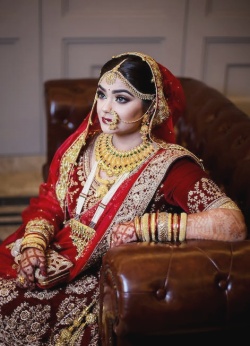
pexels.com
I went home from college early that day in the autumn when the new Tamil month of Avani started and the holy Aadi month ended. It was the yearly ceremony of changing the sacred thread worn on the shoulders of Brahmin men with chants and rituals, ending as always with a grand lunch. When I walked in, it smelled of jasmine and sandalwood, and the ceremony was over and lunch was ready. It suited me. I guessed Amma prepared it single-handedly. She was frail and crouched, in her late forties. Sitting inside a dark room opposite the kitchen, the only other people were my eldest brother, Sampath, and his new bride—they got married three months ago. There was no sign of the gold Thali chain married women wear, and her forehead showed no red Bindi, but she wore a gold-bordered white-coloured saree that was crisp and pleated, with folds showing precise lines, as was the tiny line of sandalwood paste on her forehead. I could see Sampath’s T-shirt was bright green, but he wore a Veshti—white, unstitched cloth wrapped around the waist—instead of trousers. It was 1992, a year after India opened its economy, and the prosperous youth sought to marry for love instead of an arranged union.
It was nearing one o'clock and the blazing sun lit the hall fiercely. A banana leaf, freshly cut from the kitchen garden, lay on the floor by the open window, and the dining table, a gift from Sampath to our parents, was shoved into a corner. Appa entered, and a whirl of cool air followed as Amma switched on the ceiling fan. The heat was rising, but the warm air from the roof made its way into the cloudless blue Chennai sky. Amma asked Appa, with respectful eyes, to sit down for lunch, but he did not respond. Instead, with hands on his hips, he stood looking at Sampath and his wife, who were now sitting at the table in the far corner of the hall. Sampath’s back was facing the window, and his wife sat on his adjacent side. He stared hard at the couple and, after a while, patted his forehead, saying, “Karmam, karmam, my fate!”. Then he turned to my side and took a few steps. I requested that Appa have lunch, and this time he nodded yes. Without uttering a word, Amma hurried into the kitchen, brought water in a brass vessel, sprinkled on the leaf, filled the stainless-steel tumbler, and began serving lunch. Appa sat by the banana leaf cross-legged, wiping the water off it, and started offering rice morsels and thanking the gods before partaking the food.
He was the patriarch, the eldest son of a joint family of eleven brothers and sisters. The house he had built two decades ago was large, designed to accommodate his brothers and any married sister who needed a stay-in for childbirth. I wondered: how did Appa stave off the transfers and settle early in service? Perhaps he sacrificed his job promotion? Grandma, Appa’s mother, lived with us, and Appa nurtured his younger siblings, finding jobs for them and getting them married off. Now, retired from his central government service with a tidy pension, he was tall and lean, though his slight slouch and hollow-eyed face showed signs of a losing battle against youth rebellion. We were three siblings: my eldest brother, Sampath, an older, unmarried brother, Ranga, and me. His sole concern was to marry me off without a hitch.
Amma’s eyes were focused and her lips were pursed; she did not chat except when any dish needed to be served to the three. She waited upon Appa in the hall and rushed into the kitchen to fetch the next course. In a short while, Appa had consumed the second course of Rasam, spicy tomato soup, and rice, lifted his head and wordlessly glared in her direction. Amma, dutifully, seemed to comply and made several trips to the kitchen. There seemed a mild restlessness in the way he ate; I noticed him engrossed in thoughts. After a while, when I was hanging around listlessly sorting out some books, I heard the hushed tones of Sampath’s wife speaking animatedly to my brother that grew louder until both began giggling, the giggles in an instant accentuated the difference between those sitting at the table and those on the floor, the happy rebels versus the conservative losers. I was not certain what the low tones spoke about, but I would not vouch for the giggles not having anything to do with Appa.
That was when Appa turned and lifted his face to look at them. I could hear his teeth grinding, and though I stood a little far away by the side, I could sense him brimming with rising hostility. Something about his posture said that he would leap to his feet without finishing lunch and pounce on the couple. They both glanced at him and although they must have spotted the threat, they did not retaliate. After a while, their eyes slithering away, they continued murmuring. Appa stared at them, but their heads were bowed. Then, he sat back and called Amma for Payasam, sweet porridge, proud of himself for having controlled the situation for the moment. He turned to my side with a satisfied smile.
“Did you know Sampath did not change his sacred thread today?” He nodded sideways towards the couple.
“Maybe he did it in Mumbai before arriving this morning,” I said.
By now, Sampath and his wife had stopped their hush-hush talk and were listening.
“Oh, my sweet little daughter, how innocent you are,” Appa said.
Sampath had torn his thread and threw it away while in college. Before Sampath’s tumultuous marriage, while on a trip to Mumbai, Appa and Amma had inadvertently walked in and found the couple in a compromising position; they were aghast. It took Appa two years to give a half-hearted consent to the wedding. The bride, in reaction to Appa’s silent refusal to accept her, only emboldened Sampath’s resolve to keep off the thread.
He paused with nostalgia but, after a while, continued, “I doubt if he is even wearing the sacred thread now, underneath that gaudy T-shirt of his. She and her whole family—her sisters and mother are all in it, and they want to change our ways and take away our identity. She should be grateful that I even allowed the marriage to happen,” Appa said.
I asked, “Maybe she wants Sampath to follow her ways. It’s easier to follow one way. Sampath was anyway inclined towards their ways, wasn’t he?”
“She’s a woman; she can adapt herself to our ways as easily as many have done before her for centuries,” he said.
I was not sure what to say and went into the kitchen.
“This morning, Sampath asked Ranga to go to the station to pick up Sampath’s sister-in-law. He told me it was time Ranga got to know her,” Amma said quietly.
A pause ensued.
“She is overdoing it; she wants to populate our family with her people and change us completely,” Amma said, going on as if she was echoing Appa’s words. I could not say that I was not shocked. In contrast to my perception until then of Appa making hollow allegations against Sampath’s bride, his assessments now seemed valid, after all. Maybe he was not a traditional stereotype at all. Maybe his service with the Income Tax Department made him smart enough to predict people’s moves. For a sixty-year-old man, his mind was sharp.
When I returned to the hall, a watchful silence permeated there, with three pairs of alert eyes and pricked-up ears. Amma too popped up her head as if she were wary, though she was now wanting to know if Appa was ready for the next course.
Just then the bell rang and I hurried to open the door. Ranga walked in. Later, with a banana leaf in hand, he sat down next to Appa. The murmuring at the table began, and then the couple looked over briefly to Ranga and Appa; a new sacred thread was dangling on Ranga’s shoulders.
With Ranga by his side, Appa bared his chest, straightened up, and started staring at them. He was working himself up again. The couple continued their chat quietly. Amma came over to serve Ranga; she gave me a quick glance. I could see her anxious eyes darting all around the hall.
The couple giggled again; this time softer. Appa noticed it and, evidently irritated, looked up at Amma and addressed her loudly.
“Your son, Sampath, refused to wear the new sacred thread today. Why did he come here if he was not participating in the ritual or following our customs? I’m beginning to think he doesn’t belong here anymore.” The last course of curd rice had not soothed him. He stared at Amma provokingly, but she finished serving Ranga and tiptoed to the kitchen. She walked with her head down, ignoring Appa and pretending to be occupied with her duties. But Sampath reacted visibly to Appa’s comments: he shot an electrified glance at Appa and exchanged a few quick words with his wife. He was getting ready for a fight, and it seemed as if he had come anticipating one. There was something in their gestures that showed they were experienced in confrontation. The intention of their visit was clear and they did not seem scared of or show deference to Appa, despite him being the patriarch of the family. They were waiting for Appa to continue. An alert stillness gripped the warm air. It struck me that Sampath was about to get up halfway through lunch and aggressively confront Appa. The thought sent shivers down my spine. I dropped my books. But to my dismay, Appa continued wiping the last few morsels of the curd rice off the leaf and savoured it as if nothing was happening; he ignored them and pretended to keep off, as one might ignore oinking pigs in a pigsty rather than get their hands dirty. My wide-open eyes shifted from the couple to Appa, and vice versa.
After a while, Appa was lost in thought. Nodding his head in a sense of frustration, he continued ignoring the couple as if they weren’t there. The couple watched him closely. Amma ladled out buttermilk, and as she poured it on the leaf, she looked into Appa’s eyes, but he looked away. She saw anger and pain in his eyes and feared he might go on to disown Sampath.
In a short while, the couple’s watch over Appa began waning; they resumed their chatting quietly with an occasional glance in his direction. I sensed that they were not seeking to confront Appa anymore. Eventually, they turned away from Appa and continued their quieter chats and softer giggles. There was a change in the mood, and I felt a fading down of an otherwise explosive scenario. As Appa got up, he looked weary and haggard.
There was nothing else to do and I laid the books on the creaky, old desk by the window. Outside, the afternoon heat was unbearable, and only a few walked on the streets. It was sultry now. The couple left the table, and Sampath was on the phone. Ranga left to go to his office. The street was empty, except for an autorickshaw parked a few feet away from the house. As I went into the kitchen, I could see Sampath’s bride taking leave of Amma, who was handing over some food for the journey. The mood there was solemn, and despite her smiles and giggles, they looked like two covert agents in a cold war. The couple left silently as we stood on the verandah, waving goodbye. As the auto drove away, I saw the bride’s face beam with a victorious smile.


Issue 114 (Mar-Apr 2024)
-
EDITORIAL
- Annapurna Sharma: Editorial Musings
-
SHORT STORIES
- Archana Nair: The Evil Eye
- Bibhutibhushan Bandyopadhyay: Crowd
- Emanul Haque: Wind! Wind! (Translated by Ketaki Datta)
- Meenakshi Gogoi: Monsoon Flood
- Padmaja Sriram: The New Bride
- Payal Priya: A Family Reunion
- Suzanne: Grown-ups