Asijit Datta and Patrali Chatterjee
Stories have no traceable origins, and no primal father uttered them for the first time. They are shape-shifters, body-snatchers, genre-benders, passing through brains, mouths, languages, and cultures and pausing for brief moments before passing onto some other region. Adaptations are ways of re-telling old stories, of resuscitating tales that have either been forgotten or burdened by skins of familiar dust accumulating over them. It is a vertical palimpsest where texts or images occur simultaneously, outside the linear movement of time. An experience of reading/watching an adaptation is a two-fold/two-layered experience of comparison and evaluation (without placing them in hierarchical structures) involving at least two texts (the original and the adapted, if not other adaptations preceding it). Shakespeare himself continuously adapted from various sources for the plot of his plays. He was the first writer perhaps to recognize the pleasure of locating the difference in the sameness and re-writing sameness with a difference. Performing Shakespeare (like any other literary text) on stage/screen adds extra dimensions to every pre-existing aspect of his plays. Especially in cinema, the editing apparatus complicates the associations between the visual, gestural and textual and generates complex entanglements. Through an act of mimetic reconstruction, the interiority of the material is exteriorized and given a corporeal expression. Text is transformed into flesh. Bodies replace words as the central, gravitational force which hinges the other objects together. They are clones with identical DNA and genetic composition borrowed from the parent text, but their surroundings and environment alter their consciousness and perception. These adaptations could also engender prosthetic memories in the popular imagination that contest with the original text for authenticity and survival. A particular mise en scène included in the film or subtracted from the stage might attack the reader’s memory of the primary text’s construction.
Discussing the history of Indian cinema and the influence of Shakespearean “retextualizations” (153), Poonam Trivedi writes,
The repeated resurfacing of such Shakespearean traces shows that Shakespeare is no longer the other, but exists as absorbed into the cultural imaginary of the nation, the result of a process elucidated by the cannibal theory of translation in which the original has to be "devoured" for the colonized to break free, and where the act of devouring is both a violation and an act of homage. This cannibalistic metaphor helps us to reconfigure the dynamism of the film industry with its borrowing or "consuming" of texts and their reproduction only in tangentially identifiable forms. (157-158)
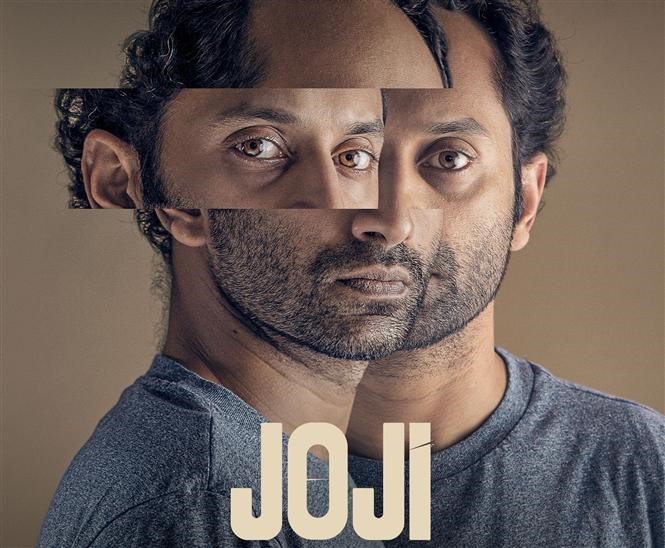
Julie Sanders approves of adaptation as the most relevant term as it signals an “attempt to make texts ‘relevant’…via…proximation and updating” and “transposition, relocating their source texts not just generically, but in cultural, geographical and temporal terms” (19-20). According to Linda Hutcheon adaptation is “repetition without replication”, and the need to adapt a text might develop from “the urge to consume and erase the memory of the adapted text or to call it into question is as likely as the desire to pay tribute by copying” (7). Hutcheon clarifies that “an adaptation is a derivation that is not derivative—a work that is second without being secondary. It is its own palimpsestic thing” (9). Shakespeare first entered Malayali consciousness in 1893 when Kandathil Varghese Mapilai “presented his 'Kalahinee Damanakam', a fairly free adaptation of The Taming of the Shrew” (Pillai 74). Since then, Malayalam cinema has reimagined and relocated Shakespeare in ways far more indigenous and transgressive. Jayaraj’s Kaliyattam (1997) (Othello) revolves around caste issues and the folk theatre of theyyam and is the first major cinematic adaptation of Shakespeare in Malayalam; Rajeev Ravi’s Annayum Rasoolum (2013) is a profound meditation on Shakespeare’s Romeo and Juliet; Iyobinte Pusthakam (2014) by Amal Neerad combines Hamlet and Dostoevsky’s Brothers Karamazov. Dileesh Pothan’s Joji (2021) is a telescopic look at Shakespeare’s Macbeth (1606) through an amoral and contradictory lens. What it performs on the ‘master’ text is an act of deconstruction and amputation.
There is neither a kingdom ruled by a despot, nor the direct presence of the supernatural machinery, or the tropes of filial vengeance, or the massive thrust of threatened masculinity. In an interview with Anupama Chopra, Pushkaran clarifies that the film, located in an orthodox Christian background in Kerala, carries only traces of Macbeth and approaches the text in an indirect design. It is a re-signification through non-Anglophone devices. Pothan’s film behaves like an anthropophagic text that devours the text it refers to, to form utterings of its own. Such adaptations enhance the meaning-making processes with its enormous lacework of intertextuality. These indicate neither the existence of an original nor copies, but rather textual becomings where one text carries forward the essential aspects of the last one. Pothan rejects all kinds of textual fidelity, and his route towards aestheticization is through hybridization and multimodality. The fundamental objective of this adaptation is to kill all identification and adopt a face that is both unrecognizable and irreconcilable. All that Pothan retains is the perverse machinations of a mind that believes in absences of all authorial figures and is single-mindedly devoted towards ways of self-preservation. Macbeth and Joji are on the same plane only if we consider their inclination towards overwhelming covetousness and an insatiable hunger for centrality. Both the characters execrate all kinds of margins, and their joint hamartia involves removing all objects that pose as obstructions in the journey from the margin to the centre. Joji’s desire for recognition and starvation due to the lack of agency are enhanced by Fahadh Faasil’s near-anorexic form.
Joji borrows its ‘father-three sons’ model from K. G. George’s emergency-era classic Irakal (Victims, 1986), which in turn closely echoes Kurosawa’s alteration of Shakespeare’s King Lear in Ran (1985). The patriarch and governing Mathukutty in Irakal is a Christian rubber baron immersed in sustaining his illicit business of marijuana and hooch. The eldest son, Koshy mirrors his father’s ruthlessness and manages part of the illegal activities, the second son is an alcoholic and struggles for his identity, and Mathukutty’s daughter Annie is a nymphomaniac. The youngest son, Baby (who also serves as a frame of reference for Joji’s persona), is an engineering student who fantasizes about blood and death by strangulation and carries an electric wire to murder his victims. Baby, who is addicted to marijuana and meditates upon his killings, exhibits no symptoms of mental illness. However, his violent dreams, cravings to kill his sex-obsessed sister, possess his father’s rifle, assist us in forming a vague character hypothesis based on oedipal upheavals and the absence of a ‘moral’ mother figure. For Joji, all these tropes connecting us to the functioning of a depraved mind are entirely nonexistent. Kuttappan is a completely modified and amplified version of Shakespeare’s Duncan; he is a hard-wearing, over-potent patriarch who used to be a wrestler and maintains full control of the estate he built singlehandedly in Erumely. The eldest son, Jomon, as a drunken Malcolm, realizes his loyalty towards his father only after his demise, and the second son Jaison is slimy and slippery like Donalbain. Pothan’s triumph is installing Duncan’s “worthiest cousin” (Shakespeare 23) Macbeth within the family as the third son, Joji. In a classic allusion to Shakespeare, Joji’s response to his paralyzed father’s “Who is there?” is “One of the subjects of your kingdom”. Pothan and screenwriter Syam Puskaran create one of the most mystifying and muddy characters in the history of Indian cinema. Every attempt to arrive at an approximation of Joji’s nature will be blocked by his cold objectivity and an opposing resistance towards jurisdiction. It is not the weight of greed that propels him; he is inclined towards ending all ruling over him, expunging everyone who obstructs his aloneness. Joji is smeared with invisibility and absence in a world saturated with masculinity and muscularity. However, the overuse of strength while removing a stone that has blocked the water source results in Kuttappan’s stroke and paralysis. Jaison’s wife Bincy operates both as the judicious, temptation originator Lady Macbeth and a maternal entity for Joji, the only one who feeds him and assesses his existence. The kitchen alters into a subversive space where Bincy, the feeder plots with a peripheral individual who eats on a slab, alone and noiseless. Joji’s accomplice from a distance, Bincy, slips into ‘ordinariness’ and righteousness after the death of Jomon. Joji derives his ascendancy and perseverance from his indifference and detachment. He lacks the vaulting ambition of the Renaissance man and the fecundity of the Vitruvian man. Passively violent and possibly asexual, his commitment is limited to purchasing fancy items online and sleeping on his father’s bed.
Pothan applies two forcefully influential symbols— the mask to protect oneself from the virus and the priest who upholds the ethical codes of Christianity. Masks work as instruments of concealment, hiding the real motive of all the members, and the Church functions as opposition to Joji’s sin of parricide. The facets of guilt and redemption are figmental to Joji, and only once in the film do we find the effect of criminality intruding on his dreamscape. Culpability metamorphoses into a nightmare, and Joji, in his father’s bed, dreams of Kuttappan emerging from the pond tied to his fishing hook. He wakes up disoriented and rushes to burn the pieces of evidence of the murder near the pond. Joji is marked by an exceeding ‘normalcy’, making it almost impossible to get underneath the thick membrane covering the sickness. Perhaps, the question Pothan poses is whether there is any disease or disorder ailing Joji; or, if it is at all possible to imagine a fictional character driven solely by apathy and a predatory tendency towards territorial sovereignty. In his desire for autonomy and a kingdom without subjects, Joji is closer to an animal. He is acquainted with limited reactions and expressions, and his instincts are only activated when his security and safety are threatened. Confined within his single room, Joji behaves like a hedonistic recluse whose way of dealing with the world is through distance and separation. He is anti-authority, anti-society and anti-religion, and molecular in nature. Being a nomad, he keeps rupturing the monadic structures of family and other such grand narratives. Similarly, Joji disintegrates the Shakespearean text’s invariation and homogeneity by placing it in a pandemic-torn Kerala and cleaving all identifiable traits from the prime mover and reducing him to non-being.
Contrary to Macbeth and Lady Macbeth, who are guilt-burdened insomniacs, Joji’s crime of killing his father by swapping his medicines is accompanied by a nonchalant act of fishing and a slow walk to the dead father’s chamber. Joji is on his bed during his father’s funeral and, after the rituals, races through a misty forest and reaches the top of a local hill. This is the only time we find joys of freedom in the physicality of Joji as he looks down at the dead Kuttappan’s kingdom partly concealed by the family-owned plantation. However, Joji’s ecstasy is transient, and his efforts to overtake the control of the house are blocked by the eldest son, Jomon (who now acts as the father substitute). According to the legal conventions, the plantation passes on to Jomon, the shop, and the property in Mundakkayam to Jaison, and Joji receives the house and the surrounding compound. For Joji, the father's house is the object of desire and fantasy, the only place where he would do nothing and perform nothing.
The methods employed by Joji to kill his father and brother are relatively unusual in the context of Indian cinema and unlike any other Macbeth ever seen on screen. Adding to the outlandish act of replacing his father’s pills, Joji eliminates the suspecting Jomon by shooting him twice in the neck with his nephew Popy’s pellet gun and rounds it up with a local bomb explosion. Joji’s fragile and insubstantial physique compared to other male members in his family makes him vulnerable and susceptible to persistent physical threats. In the film, he is choked thrice—first unjustly by his father on suspicion that he embezzled eight thousand rupees and again for demanding money for his financial growth and finally, by Jomon to force a confession out of him. To compensate for his physical incapacity, Joji keeps overcharging his mind through silent introspection and planned organization.
Joji is a spectral being from the beginning, existing in the fringes and by degrees moving toward the centre. He equates the abuses and contumelies he receives from his family with the world outside and reflects the macrocosm on the mirror of the microcosm. There is an intemperate distrust towards society in Joji, and part of his inhumanity springs from this reservation and diffidence. When Jomon gags him in the field, Joji gaspingly voices, “Don’t trust the society,” and finally, his dying declaration on the mobile screen reads, “This is not my suicide note. This is my MARANA MOZHI. The society has fucked me. The society has killed me. Arrest them”. Profanely defying Macbeth’s last assertion, “be damned he who first cries, 'Hold, enough!'” (Shakespeare 160), Joji searches for the “weakest spot in the skull” on the internet and shoots himself in the head with the air gun. Unlike the severed head of Macbeth levitating over the kingdom in Polanski’s (1971) interpretation, or Washizu’s arrow-inflicted body writhing in pain and yet prevailing in Kurosawa’s Throne of Blood (1957), or the passionate death of Bhardwaj’s (2003) messianic Maqbool, Pothan refuses to grant the glory and tragedy in death to his Macbeth.
Robert Stam, while explaining his fourth and fifth reasons for hostility towards cinematic adaptations, mentions “logophilia, or the valorization of the verbal, typical of cultures rooted in the sacred word of the “religions of the book”” and “anti-corporeality, a distaste for the unseemly “embodiedness” of the filmic text; the “seen”… is regarded as obscene” (6). Joji is mute speculation in cinema performed by an undernourished character that destroys all textual imaginations linked to Shakespeare’s Macbeth. The text is the ground for the birth of the anti-text. The film ends with a close shot of Joji directly gazing into the camera. Joji’s unmoving eyes are not only a potential warning evoking horror within the audience; it is simultaneously an appeal for empathy to unravel a cryptic character. By extension, it is Pothan’s eye of adaptation scanning, breaking, and reconstructing Shakespeare. Located inside Malayali culture and language, the film transmutes into a polymorphous meeting point that pushes the Shakespearean text to a point of un-recognition or misrecognition. Shakespeare is neither historicized nor preserved by Pothan; rather, Shakespeare, as text and history, is inflated, blasted, and splintered into microscopic filaments.
Works Cited
“Fahadh Faasil, Dileesh Pothan, Syam Pushkaran Interview with Anupama Chopra”. Film Companion, https://www.youtube.com/watch?v=J-QApMDrfGU.
George, K. G., director. Irakal. https://www.youtube.com/watch? v=IYIhmb6tzMQ.
Hutcheon, Linda. A Theory of Adaptation. Routledge, 2006.
Kumara Pillai, Kainikkara M. “Shakespeare in Malayalam.” Indian Literature, vol. 7, no. 1, 1964, https://www.jstor.org/stable/23329681. Accessed 28 July 2021.
Pothan, Dileesh, director. Joji. Bhavana Studios in association with Working Class Hero, and Fahadh Faasil and Friends, 2021.
Sanders, Julie. Adaptation and Appropriation. Routledge, 2006.
Stam, Robert. “Introduction.” Literature and Film, edited by R. Stam and Alessandra Raengo. Blackwell, 2005, pp. 1-52.
Shakespeare, William. Macbeth. Arden, 2003.
Trivedi, Poonam. “"Filmi" Shakespeare”. Literature/Film Quarterly, vol. 35, no. 2, 2007, https://www.jstor.org/stable/43797348. Accessed 20 July 2021.


Issue 98 (Jul-Aug 2021)
-
Articles
- Adrija Guha: Indianizing Othello – Various Shades of the Shakespearean Tragic Hero in Bengali Films
- Ambika Barua: Shakespeare in Kolkata – Reading Hrid Majharey as an Adaptation of Shakespeare
- Aratrika Das: If Only Desdemona Were a Mother!
- Asijit Datta and Patrali Chatterjee: Subtracting and Entering Shakespeare – Locating a Malayali Macbeth in Dileesh Pothan’s Joji
- Faizy Abdul Kalam: William Shakespeare – Resisting the Binaries
- Gopika Hari: Where shall we three meet again? In Bewitched Spaces, by the sea and lane – Use of mis-en-scene to create bewitched spaces in Paddayi
- Harismita Vaideswaran: Singing Bollywood, Seeing Shakespeare – The Use of Music in Vishal Bhardwaj’s Haider
- Ishanika Sharma: Bhansali’s Ram-Leela – No Space for Ancient Grudges
- José Ramón Díaz Fernández: Vishal Bhardwaj’s Shakespearean Adaptations – A Selective Bibliography
- Mintu Nath: Adaptation of Shakespeare in Assamese film – A Comparative Study of The Comedy of Errors and Local Kongfu 2
- Nikolai Endres: Shakesqueer, False Hearts, Revenge – Vandana Kataria’s Noblemen and The Merchant of Venice
- Puja Chakraborty: The Precarity of Nostalgia, Loneliness and Ageing – Reading Rituparno Ghosh’s The Last Lear
- Raj Sony Jalarajan and Adith K Suresh: Postmodern Transpositions of Shakespeare in Malayalam Cinema – A Transformative Discourse of Regional Tragedy
- Ritushree Sengupta: Bengali Cinema’s Shakespearean Canvas – A reading of Hrid Majharey
- Sacaria Joseph: Kaliyattam – Incarnating Othello in the World of Theyyam
- Sayan Aich Bhowmick: To the brink of Widowhood – The Plight of Half Widows in Haider
- Subhankar Bhattacharya: ‘I will endure’ – Traces of King Lear in 3 Indian English language films
- Swarnavel Easwaran: Shakespeare and Tamil Cinema – The Pioneer, Thespian, and Special Effects
- Editorial
- Editorial
- Editorial
- Editorial
- Editorial