GSP Rao
GSP Rao
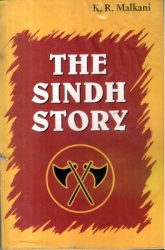
Cover page of K R Malkani’s book. Image credit – Menka Shivdasani.
Hindu Sindhis are perhaps the most enterprising and resilient community in India. Having had to leave their homeland at the time of the Partition, an entire community became exiles in what is their own country. While many settled down in the nearby regions of Gujarat, Rajasthan and Maharashtra, several Sindhis scattered across India to rebuild their lives. And rebuild they did with exemplary grit and business acumen. Their adaptability enabled them to adjust to local conditions and culture everywhere. Starting from scratch at every place—often in refugee camps—they re-carved their destinies with single-minded focus, perseverance and self-belief. Today, the community is among the most economically well-off in the country. Many are into trade and business, with the well-educated younger generation moving into various fields the world over. The Sindhi culture strongly emphasises entrepreneurship and social, community-based values. Despite this enormous success, the community has remained unassuming and has retained its strong identity.
Sufi mysticism and music, vibrant traditions, and deep-rooted hospitality are the hallmarks of their culture. Sindhi literature boasts a 1,000-year history, with Shah Abdul Latif, Sachal Sarmast, and Sami being its classical poets. The post-Partition literature explores the themes of migration, exile and identity. Recent decades have seen the emergence of several meritorious writers and poets—males and females—across all the literary genres.
It has been almost eight decades since the Sindhis left behind their hearts and hearths in Sindh, with their cultural roots there tracing back to the Indus Valley Civilisation. The heartache they carried may have ebbed somewhat over this period, but the angst of that separation, and the sense of rootlessness it has caused, still simmers. The younger generations may have lost the intensity of the bonds with their homeland, but there seems to be a strong revival in recent times of their interest in upholding their traditional culture and Sindhyat.
It is this intense feeling of displacement and the lack of a homeland that come through vividly in most of the articles and creative writings presented in this special feature on ‘Contemporary Sindhi Literature’ in Muse India, very ably curated by Guest Editor Menka Shivdasani, a member of Muse India since its inception. A seasoned writer and poet in English, an editor and translator, she co-founded the Poetry Circle in Bombay (1986). Menka, earlier, put together Muse India’s first feature on Sindhi Literature in 2011. A lot of development has happened in the Sindhi literary scene since then, and many young, vibrant voices have emerged. The articles in the feature take a look at the contemporary scenario in several literary genres, like novels, short stories, poetry, drama, and women's writings. Menka presents very interesting conversations she had with two highly respected senior writers, Mohan Gehani and Nand Javeri, both of whom were witnesses to the trauma of Partition and migration. In the feature, we also get a brief glimpse of the Sufi poets, Shah Abdul Latif and Nimano Faqir.
In addition to Menka, twenty writers and translators have contributed to the feature, providing a broad perspective. Some of these writers have extended help to Menka in her work. My heartfelt gratitude to Menka for her painstaking efforts and to all the writers for their significant contributions. It has been a work of passion.
I am delighted to share that Menka Shivdasani has graciously agreed to serve as Muse India’s Contributing Editor for Sindhi Literature, with immediate effect. She will be able to regularly introduce young and emerging voices to Muse India’s global readership. On behalf of the entire Muse India team, I extend a very heartfelt welcome to her.

Issue 126 (Mar-Apr 2026)
-
MESSAGE FROM THE MANAGING EDITOR
- GSP Rao: Message from the Managing Editor
-
EDITORIAL
- Menka Shivdasani: Introduction
-
CONVERSATIONS
- Menka Shivdasani: In a Conversation with Mohan Gehani
- Menka Shivdasani: In Discussion with Nand Javeri
-
ARTICLES
- Barkha Khushalani: Lights, Language, Legacy - The Story of Sindhi Drama
- Maia Bhojwani: Old Times in Sind - Memoirs of Seth Naomul Hotchand, C.S.I., of Karachi, 1804-1878
- Manthan Bachani: The Resilient Ink - The Rise of Young Sindhi Voices in Indian Literature
- Menka Shivdasani: Bengal and Sindh - Lasting Connections
- Prerna Gulrajani: Sindhi Women Writers - Striving to Be Heard
- Saaz Aggarwal: Waiting on the Threshold
- Sravana J Doddapaneni: Beyond Partition Memory through Post-2000 Negotiations of Language, Diaspora and Gender in Sindhi Literature
- Susheel Gajwani: A Literature Without a Territory
- Vandana Govindani and Nirmala Menon: Partitioned Language, Audible Futures - Reconfiguring Access to Sindhi Literature through Digital Audio Archives
- Veena Shringi: The Life and Times of Dr Harumal Sadarangani Khadim
- Vidya Tewani: Bonding and Belonging - The River Sindhu in Sindhi Hindu Diaspora Poetry
- Vinod Asudani: Evolution of Sindhi Poetry in the Post-Independence Era
-
SELECTED SINDHI BOOKS
- Menka Shivdasani: From my Bookshelf – Books on Sindhi Literature in English
-
BOOK REVIEW
- Vidya Tewani: ‘My Sindh – A Journey to the Beloved Homeland’
-
POETRY
- Arun Babani
- Manthan Bachani: Poems in English Translation
- Menka Shivdasani: ‘The Flute and The Tree - A Tale of Marui-Umar’
- Nimano Faqir, Sufi Saint
- Rishika Williams
- Sandhya Chander Kundnani
- Vidya Tewani
-
SHORT STORIES
- A J Uttam: ‘Blind Faith…Self Faith’ - Translated by Abhilasha Sawlani
- Murli Melwani: ‘Those Who Have Been Behind the Rainbow’