Vandana Govindani and Nirmala Menon
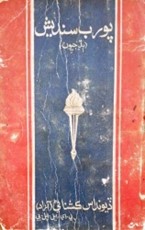
Poorab Sandesh (1942) by Edwin Arnold Biography of Gautam Buddha in Sindhi Translation by Dewandas Kodumal Kishnani Azad Source: Indian Institute of Sindhology
SINDHU, a landmark open-access audio repository of rare pre-1947 Sindhi books written in the Perso-Arabic script, is taking shape at IIT, Indore, in association with the Indian Institute of Sindhology. Ph.D. Research Scholar VANDANA GOVINDANI and Dr NIRMALA MENON, Professor at the School of Humanities and Social Sciences, tell us more about this important and unique initiative that will make Sindhi literature accessible to those who have never had the opportunity to learn the script.
Introduction and Background
The precarity of Sindhi language and literature in India is historically shaped by the unanticipated cross-border displacement of a culturally rich and economically empowered Sindhi Hindu community from Sindh. In the aftermath of 1947, the permanent territorial severance of Sindhi Hindus from ‘Sindh’ compelled the Sindhi language and its literary culture to evolve across diverse regional settings under varying linguistic and socio-political influences. In Pakistan, Sindhi has undergone increasing processes of Arabicisation and Urduisation, while in India it became progressively Sanskritised and Hindicised through the deliberate exclusion of Perso-Arabic forms (Khubchandani 2007). Nihalani (1978) further notes the growing presence of Hindi and English in urban Indian Sindhi usage. Lekhwani (2011) observes that in the post-Partition context, the dialectal diversity that characterised pre-Partition Sindhi texts has gradually diminished among Sindhi Hindus in India, with the standard Vicholi variety emerging as dominant. Examining this peripheral linguistic status of Sindhi, shaped by socio-political and pragmatic factors, Daswani laments its condition as that of a fully elaborated and socially recognised language falling into disuse and being progressively abandoned by its speakers in the absence of sustained social and regional support for its continuation.
This scenario represents the loss of heritage language and literary culture, which embodies the composite and syncretic spirit of Sindh, where diverse religious, linguistic, and philosophical traditions coalesced over centuries (Bhavnani 2014). The Sindhi language in India received official constitutional recognition under the Eighth Schedule only after sustained and prolonged efforts by Sindhi writers and cultural advocates. However, this recognition, granted in 1967, arrived belatedly and had already coincided with the marginalisation of the language (Aggarwal 2023) across public and institutional domains. By this time, an entire generation of Sindhi Hindus, already burdened by the pressures of post-Partition resettlement within unfamiliar social, linguistic, and political environments, had limited access to formal support for language transmission. Consequently, the fragmented and inconsistent presence of Sindhi in educational spaces, coupled with its absence from administrative domains, produced a profound intergenerational disruption in linguistic continuity. As Daswani observes, this structural marginalisation fostered indifference and growing unfamiliarity among younger generations with their linguistic and literary heritage (Daswani 1989), culminating in widespread anxieties about the future of Sindhi in India as one marked by decline, attrition, and potential irreversible loss.
Orthographical Complexities and Inaccessibility to Written Literature
One of the marked characteristics of the marginalisation of Sindhi written literature is the unresolved script debate. The Perso-Arabic script was standardised and made official for the Sindhi language under British rule in 1853; also, the nineteenth century witnessed a rise in printing culture. Consequently, a great deal of Sindhi literature was published in the Perso-Arabic script and circulated widely (Govindani and Menon 2024). Anand underscores the divisions among Sindhi leaders themselves over the question of script (1996). The Perso-Arabic script had to undergo various political and religious trials (Kothari 2008), motivated by the discrete political, personal and religious biases of Sindhi leaders. Consequently, the Sindhi community endured a division in written literature. Different scholars and writers have emphasised the undeniable importance of Perso-Arabic, as it continues to represent authenticity, historical continuity, and literary legitimacy. It remains the script in which most classical Sindhi literature is preserved (Asani 2003, p. 626). Kothari notes that the Perso-Arabic supporters see the shift from the Perso-Arabic script as a “sell-out” and falsification of the Sindhi literary heritage (2008, p. 139).
Knowledge of the Perso-Arabic script remains central to accessing and circulating the vast corpus of Sindhi literature that preserves the Sindhi cultural ethos in its most continuous and unfragmented form. In post-Partition India, Perso-Arabic is largely confined to the older generation, predominantly first-generation Sindhi migrants who received foundational education in the language, a demographic that is rapidly diminishing. This demographic shift has rendered translation and transliteration not merely desirable but critically urgent. Bijani attributes the acute scarcity of translations and transliterations primarily to declining proficiency in the source script, Perso-Arabic, among post-Partition generations (Bijani 2022). Sindhi scholars and practitioners consistently underscore that sustained engagement with the Perso-Arabic script, whether through manual translation or digital transliteration, remains indispensable for the expansion, circulation, and long-term survival of Sindhi literature (Bijani 2022; Gehani 2023; Tarachand 2023).
At present, only a small number of individuals in India possess both the linguistic competence and the literary-historical grounding required to translate Sindhi texts with fidelity to their aesthetic, cultural, and intellectual traditions. Aggarwal draws attention to this stark scarcity by noting that she, along with two other translators in India, has produced substantial English translations of Sindhi literature, a task made possible largely through sustained reliance on older scholars with deep expertise in Sindhi written traditions. Sindhi writers, elder community members, and cultural custodians repeatedly articulate a sense of apprehension regarding the impending rupture between future generations and their literary heritage. Given this widening intergenerational divide and the continued inaccessibility of a large, uncatalogued body of Sindhi texts, there is an urgent need for a structured, long-term framework that systematically addresses these limitations (Vandana and Menon 2024) while enabling sustainable modes of literary transmission.
Intergenerational Rupture: Reflexivity, Script, and Audio-Based Methodologies
As a third-generation Sindhi migrant in India, I must acknowledge that my journey to this point has been shaped by my own distance from and unfamiliarity with the depth and scale of Sindhi literary and written traditions. Until the early stages of my PhD, I remained largely unaware of the very existence of a substantial Sindhi literary corpus and its historical significance. This disengagement became evident when a colleague casually questioned me about my ethnic background and familiarity with native literary traditions, a query I dismissed with indifference, owing to my lack of exposure to them. This moment of confrontation, however, prompted my first sustained engagement with Sindhi literature, an encounter that proved both revelatory and unsettling. I was struck by the extent of cultural and literary disconnection experienced by younger generations of Sindhis, including myself, from their linguistic and intellectual heritage.
This realisation became the impetus for undertaking the present study on the post-Partition marginalisation of Sindhi literature. In attempting to understand the structural consequences of Partition that have shaped Sindhi literary underrepresentation in India, I encountered immediate and persistent barriers to access. A significant portion of the Sindhi literary corpus remains commercially unavailable, undigitised, untranslated, and excluded from the mainstream catalogues of Indian regional literatures (Tarachand 2023). My initial engagement with Sindhi literary history was therefore mediated almost entirely through community-managed cultural libraries and through the knowledge shared by older generations of Sindhi literary custodians and enthusiasts. While these encounters enabled a preliminary introduction to the field, they also underscored the fragmented and precarious conditions under which Sindhi literary knowledge survives.
Despite these efforts, the script barrier emerged as the most decisive point of disconnection. Except for a limited number of translated works, a substantial body of Sindhi literature remains accessible only in the Perso-Arabic script. Confronted with this structural inaccessibility during my research, I looked for a practical method to engage with Sindhi literary texts without compromising their linguistic integrity or interpretive depth. Since acquiring functional reading proficiency in the Perso-Arabic script is necessarily a long-term process. Sahib Bijani, Director of the Indian Institute of Sindhology, generously offered to read selected Sindhi literary texts aloud to me during extended telephone conversations. I systematically recorded these readings and later returned to them for careful listening and detailed textual analysis. What began as an improvised response to a research limitation gradually opened up a more intimate and direct mode of engagement with Sindhi literature, one that preserved its oral rhythms, tonal inflections, and narrative textures by virtue of being orally recited by a literary expert while also bypassing the immediate constraints of script literacy.
This experience proved transformative and provided the conceptual foundation for an audio-based digital repository aimed at enabling scholars and younger Sindhi readers to engage meaningfully with Sindhi literary heritage, even in the absence of script proficiency. As a broader objective of my doctoral project, we at IIT Indore, in collaboration with the Indian Institute of Sindhology, a Sindhi cultural centre housing one of the largest Sindhi libraries in India, are developing SINDHU, an open-access audio repository of rare pre-1947 Sindhi books written in the Perso-Arabic script.
SINDHU: Digital Audio Archiving of Rare Sindhi Literature—Reconfiguring Accessibility
SINDHU is a culturally rooted, community-participatory, audio-based digital archival initiative. While technology cannot replace human interaction, it can meaningfully support cultural transmission by enabling new and innovative forms of access. In this regard, the digitisation and archiving of cultural expressions offer multifaceted opportunities to sustain cultural transmission, facilitate education, and strengthen community development (Alivizatou, Marilena, et al.2017). Within contemporary heritage and knowledge practices, the concept of the archive has expanded beyond its conventional definition as a repository for documents and materials of public or historical interest to encompass questions of accessibility, discoverability, and global engagement.
|
|
|
||
| Suhnee Mehaar (1939), a Full-length Play Lalchand Amardinomal Jagtiani & Dingu Kundanmal Thadhani. Source: Indian Institute of Sindhology | Gulistan (1935), a Collection of Essays. Compilers: Lekhraj Aziz & Fatahchand Mangalram. Source: Indian Institute of Sindhology |
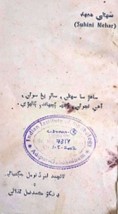
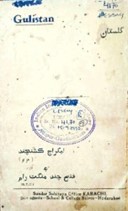
Resonating with such inclusive frameworks, the curation and selection of these texts is undertaken by an expert Rare Book Selection Committee of Sindhi writers, cultural scholars, and literary experts who are formally and informally embedded within Sindhi literary and cultural traditions. As presently envisioned, the project proposes to commence with the identification of 100 rare texts, selected on the basis of their historical significance, literary merit, and linguistic value. The expert book selection committee comprises Mohan Gehani, Sindhi translator and scholar; Nand Chhugani, Sindhi writer and scholar; Sahib Bijani, Sindhi writer, compiler, and literary expert; Namdev Tarachandani, Sindhi writer and scholar; and Varsha Udhovdasani, retired professor of Sindhi. The Indian Institute of Sindhology, a non-governmental and community-funded Sindhi cultural organisation, serves as the custodian of the literary texts being transformed into audio form, while IIT Indore provides the technical, infrastructural, and technological support central to the project’s overall workflow, including training and quality assurance. The recordings are produced by a cohort of 11 expert Sindhi readers, comprising language specialists and educators drawn from different states across India. Grounded in the principles of equitable knowledge distribution, access, and cultural participation, the initiative explicitly foregrounds inclusive community involvement, collaboration, and sustained engagement as its core pillars.
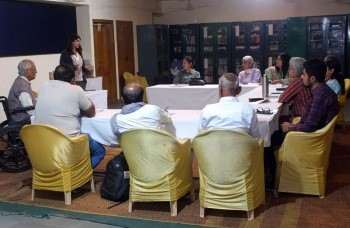
Indian Institute of Sindhology.
Source: Indian Institute of Sindhology and IIT Indore
The project was initiated through a hands-on training workshop for the selected Sindhi expert readers, held at the Indian Institute of Sindhology under the joint supervision of IIT Indore and the Institute of Sindhology. The workshop functioned as a collaborative capacity-building space, enabling Sindhi language experts, highly proficient in their literary and linguistic domains but often distanced from digital technologies, to acquire the technical skills necessary for audio recording and preservation. This training was followed by individual recording and primary audio-editing sessions, during which participants were introduced to essential recording practices and editing techniques.
At present, 70 of the planned 100 books have been recorded and are undergoing a final, secondary round of technical editing. The digital repository is scheduled for public launch by mid-2026. Through this initiative, the project seeks to confront long-standing barriers to access while safeguarding the linguistic, performative, and cultural authenticity of Sindhi literature.
References
Aggarwal, Saaz. “A Mother Tongue Partition Consumed Intact: The Depletion and Revival of Sindhi Language and Culture.” Scroll.in, 28 Jan. 2023, scroll.in/article/1042577/a-mother-tongue-partition-consumed-intact-the-depletion-and-revival-of-sindhi-language-and-culture.
Alivizatou, Marilena, et al. “Intangible Cultural Heritage and New Technologies: Challenges and Opportunities for Cultural Preservation and Development.” Universal Access in Human–Computer Interaction: Supporting Learning, Work and Everyday Activities, edited by Constantine Stephanidis, Springer, 2017, pp. 129–142. https://doi.org/10.1007/978-3-319-49607-8_5.
Anand, Subhadra. National Integration of Sindhis. Vikas Publishing House, 1996.
A. S. Asani. ‘At the crossroads of Indic and Iranian civilisations: Sindhi literary culture’, in S. Pollock (ed.), Literary Cultures in History: Reconstructions from South Asia, (Berkeley: University of California Press, 2003), 612–646.
Bhavnani, Nandita. The Making of Exile: Sindhi Hindus and the Partition of India. Tranquebar Press, 2014.
Bijani, Sahib. Personal interview. Conducted by Vandana Govindani, 17 Feb. 2022.
Daswani, C. J. “Multilingualism and Language Decay: The Case of Indian Sindhi.” International Journal of the Sociology of Language, no. 75, 1989, pp. 55–60.
Gehani, Mohan. Telephonic interview. Conducted by Vandana Govindani, 20 Apr. 2023.
Himmelmann, Nikolaus P. “Documentation and Descriptive Linguistics.” Linguistics, vol. 36, 1998, pp. 161–195.
Khubchandani, Lachman M. “Sindhi.” The Indo-Aryan Languages, edited by George Cardona and Dhanesh Jain, Routledge, 2007, pp. 683–721.
Kothari, Rita. “Kothari, R, The Paradox of a Linguistic Minority.” The Paradox of a Linguistic Minority, 2008.
Lekhwani, K. P. Sindhi Boli ai Adaba Ji Tarikha [History of Sindhi Language and Literature]. Central Institute of Indian Languages, 2011.
Nihalani, P. K. The Phonetics of Sindhi. Doctoral dissertation, University of Edinburgh, 1978.
Tarachand, Namdev. Telephonic interview. Conducted by Vandana Govindani, 14 Apr. 2023.

Issue 126 (Mar-Apr 2026)
-
MESSAGE FROM THE MANAGING EDITOR
- GSP Rao: Message from the Managing Editor
-
EDITORIAL
- Menka Shivdasani: Introduction
-
CONVERSATIONS
- Menka Shivdasani: In a Conversation with Mohan Gehani
- Menka Shivdasani: In Discussion with Nand Javeri
-
ARTICLES
- Barkha Khushalani: Lights, Language, Legacy - The Story of Sindhi Drama
- Maia Bhojwani: Old Times in Sind - Memoirs of Seth Naomul Hotchand, C.S.I., of Karachi, 1804-1878
- Manthan Bachani: The Resilient Ink - The Rise of Young Sindhi Voices in Indian Literature
- Menka Shivdasani: Bengal and Sindh - Lasting Connections
- Prerna Gulrajani: Sindhi Women Writers - Striving to Be Heard
- Saaz Aggarwal: Waiting on the Threshold
- Sravana J Doddapaneni: Beyond Partition Memory through Post-2000 Negotiations of Language, Diaspora and Gender in Sindhi Literature
- Susheel Gajwani: A Literature Without a Territory
- Vandana Govindani and Nirmala Menon: Partitioned Language, Audible Futures - Reconfiguring Access to Sindhi Literature through Digital Audio Archives
- Veena Shringi: The Life and Times of Dr Harumal Sadarangani Khadim
- Vidya Tewani: Bonding and Belonging - The River Sindhu in Sindhi Hindu Diaspora Poetry
- Vinod Asudani: Evolution of Sindhi Poetry in the Post-Independence Era
-
SELECTED SINDHI BOOKS
- Menka Shivdasani: From my Bookshelf – Books on Sindhi Literature in English
-
BOOK REVIEW
- Vidya Tewani: ‘My Sindh – A Journey to the Beloved Homeland’
-
POETRY
- Arun Babani
- Manthan Bachani: Poems in English Translation
- Menka Shivdasani: ‘The Flute and The Tree - A Tale of Marui-Umar’
- Nimano Faqir, Sufi Saint
- Rishika Williams
- Sandhya Chander Kundnani
- Vidya Tewani
-
SHORT STORIES
- A J Uttam: ‘Blind Faith…Self Faith’ - Translated by Abhilasha Sawlani
- Murli Melwani: ‘Those Who Have Been Behind the Rainbow’