Sapna Dogra
Sapna Dogra
Abstract
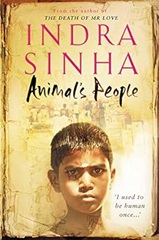
Indra Sinha’s Animal's People (2007) is a novel rich in themes that explore the issues of poverty, social injustice, corruption, identity, trauma and resilience. The novel is set against the 1984 Bhopal Gas Tragedy in India. The industrial disaster killed many people and left thousands physically disfigured and handicapped. The novel was shortlisted for the 2007 Man Booker prize and won the 2008 Commonwealth Writers’ Prize: Best Book from Europe and South Asia. The story follows a 19-year-old orphan named Animal born in Khaufpur, a fictional city modelled after Bhopal. He walks on all fours due to a deformed spine. He developed the deformity in the aftermath of the chemical disaster. One of the major themes of the novel is the impact of corporate negligence. This paper attempts to study the issue of corporate politics and negligence. The paper argues that the book is a plea for responsibility and the acceptance of human rights in the face of institutionalised oppression. The novel, by extension, can be read as the tragedy of a nation that suffers from flawed leadership.
Keywords: Bhopal Gas Tragedy, Animal, Corporate Negligence, Indira Sinha.
Introduction
Indra Sinha's Animal’s People (2007) is an innovative novel that examines issues of identity, trauma related to chemical disaster, rampant social injustice, corruption and resilience. The novel is set against the backdrop of the 1984 Bhopal Gas Tragedy, the Union Carbide gas leak, in the Union Carbide Corporation (UCCC). The pesticide plant in Bhopal leaked around 27 tons of poisonous methyl isocyanate gas and instantly killed thousands of people. It was a major industrial disaster in India. The narrative of the novel centres on Animal, the protagonist, a 19-year-old orphan named for his physical condition, a deformed spine that forces him to walk on all fours because of his malformed spine. He was born in Khaufpur (which translates as an area of fear), a fictional city modelled after Bhopal. He walks on all fours because he developed a deformity following the chemical accident. It doesn’t take long for the readers to recognise that Bhopal is ‘Khaufpur’, the Union Carbide is ‘Kampani’, and Anderson is ‘Peterson’. Lesley Mason, in the review of the book, says, “The place you should seek is not Khaufpur. It is Bhopal. Remember Bhopal? If you do, then I urge you to read this book to ignite your anger and your compassion anew. If you do not, then I urge you to read that you might learn or reconsider or, at the very least, remember.”
It is a socially pertinent novel in which the first-person narrative is built to read as an autobiographical account. It is stated in the Editor’s Note, “This story was recorded in Hindi on a series of tapes by a nineteen-year-old boy in the Indian city of Khaufpur. True to the agreement between the boy and the journalist who befriended him, the story is told entirely in the boy’s words as recorded on the tapes” (Sinha). This is an intelligent ploy which adds to the ingenuity of the novel. Sinha structures the twenty-three chapters, which are titled chronologically as “tapes”, that again reinforces the idea of the novel being a transcription. The novel follows the tragedy of the Khaufpuris: “Ous raat, cette nuit, that night, always that fucking night” (Sinha 5). The transcription of the tapes follows a unique structure.
The protagonist, Animal, grapples with a unique physical condition and a specific place in the social structure. Through his story, the novel explores the concept of identity in the context of marginalisation and disability. Parry (2017) says:
Indra Sinha’s Animal’s People is a story of political violence, environmental degradation, and extreme poverty. With its provocative possessive, the novel's title foregrounds the categorical division and priority implicit in the relationship between ‘animal’ and ‘people’, and announces the text as invested in the entanglements with and distinctions between animals who are not people, and humans who are. (15)
By obfuscating the distinction between human and animal, the book challenges the notion of humanity and draws attention to the vulnerability of marginalised communities. Animal introduces himself at the beginning of the novel, “I used to be human once. So I’m told. I don’t remember it myself, but people who knew me when I was small say I walked on two feet just like a human being (1).” Much later in the novel, he reemphasises his condition with no loss of vigour:
I am an animal fierce and free. In all the world, none is like me crooked I’m, a nightmare child few on hunger, running wild, no love and cuddles for this boy like without hope, laugh without joy, but if you dare to pity me I’ll shit in your shoe and piss in your tea.” (172)
Animal learns to survive in the harsh and cruel world despite its physical deformity. His story is proof of the resilience of oppressed people who face systemic injustice everywhere. Animal struggles with his identity a lot. He maintains that he is an animal and rejects the notion that he is human. His struggle explores the themes of self-acceptance, dehumanisation of the poor and social labeling of the disabled people. Parry (2017) says that his body “functions as a symbol of an exploited body politics” (15). Similarly, Williams (2018) says that “... Sinha’s effort to seek redress for environmental justice communities involves the reintroduction of the bodies of victim and perpetrator into narrative to foreground the body as a crucial rhetorical element in a contest between marginalised people and the gargantuan powers that oppose and oppress them.” (586)
One of the major themes that the novel critiques is corporate negligence and the devastating and widespread consequences of industrial disasters such as the Bhopal Gas Tragedy. The case provides a fertile ground to study the issue of politics and negligence. (Geetha 2018) With this, the novel questions the ethics of responsibility and specifically corporate responsibility. The Bhopal Gas Tragedy is depicted as a disaster which is caused by an American chemical company that simply refuses to take responsibility. The readers witness the failure of the legal and political system, which is reflective of global inequalities in contemporary times. The story presents big Kampani as a metaphor of neo-colonialist endeavours. The first world blatantly inflicts its heinous crimes on vulnerable nations. Basumatary says:
But, Sinha, through his novel Animal’s People (2007), expresses his belief that he sees literature, like the critic Joseph Slaughter, as a medium to recompense ambiguities in the human rights discourses and narratives. By rendering a cultural discourse to a monumental human tragedy, Sinha highlights the rampant human rights abuses and sees the possibility of its operationalisation/enforcement through the active involvement of all the stakeholders. Sinha gives the readers an insight and an idea about the bitter truth or fact that exists in the underbelly of the largest democracy in the world. The combination of poverty, social hierarchy, institutional weaknesses, corruption, marginalisation of the various minorities/subalterns and an inaccessible justice system makes a lethal poison (which is even more harmful than the poisonous gases released by the pesticide factory), resulting in what can be called “democracy deficit”, the root cause of human rights violations. (60-61)
In a similar vein, Nixon (2011) says that the novel focuses on three of the defining characteristics of the contemporary neoliberal order. The first being “the widening chasm—within and between nations—that separates the megarich from the destitute”; second the “attendant burden of unsustainable ecological degradation that impacts the health and livelihood of the poor most directly” and finally, the way “powerful transnational corporations exploit under cover of a free market ideology the lopsided universe of deregulation, whereby laws and loopholes are selectively applied in a marketplace a lot freer for some societies and classes than for others.” (63). Even the issue of Western aid is critiqued as nothing but a neocolonialism in disguise. With the arrival of an American doctor, Ellie, there is hope, but her interaction with the local community makes us question the role of Western intervention and charity. Doesn't charity, which is specifically Western, reinforce power imbalance, Sina questions. The novel depicts how local authorities, including minor political and religious leaders, manipulate the disaster for their own material gains. They have no interest in the issue of inaccessible justice for the victims. Their sole concern is personal gain. This is a harsh indictment of corruption and abuse of power. The novel exposes the personal and political manoeuvring of the local power structures who continue to revel in the suffering of the victims in their own interest. Mukherjee says, “What began as a failure of documentation and lack of authentic data on the cause and fallout of the disaster has over the years become a saga of neglect (1).
This goes hand in hand with corporate greed, apathy, irresponsibility and indifference. Multinational corporations, particularly the American chemical company that is responsible for the disaster, are indifferent to the suffering of the victims. They are seen leaving the factory without properly cleaning it up and denying any responsibility for the chemical contamination. They exploit legal delays and bureaucratic snags, and they use their wealth to influence the justice system. Without accountability, the weaker and more marginalised communities are allowed to suffer. Parry (2017) says
Animal’s People is not, though, a story about a boy seeking his rightful status as an autonomous and properly upright human. It is instead the story of the unavoidable entanglement of a self and a world, and of a human animal and his struggle to disentangle himself from the categories and politically driven practices that frame him as an aberrant and worthless, less-than-human being. (16)
Animal's distinct voice is reflected in the novel's prose, which is written in a combination of Hindi and English. Many critics, including Holoch (2015), focus on the language of the novel. Brigette Rath has used the term “pseudotranslation” to describe the novel’s linguistic structure. She opines that, “A reader can choose to hear both the translator's and Animal's voice, as the English text of the novel is characterised by an unusual, often grammatically non-standard style” (172). The narrative is meant to be read as a direct account, not tainted by authorial voice or intervention.
So, from this moment I am no longer speaking to my friend the Kakadu jarnaliss, the name’s Phuoc, I am talking to the eyes that are reading these words, Now I am talking to you” (12).
Sinha uses storytelling as a means of self-expression and survival. Animal often refers to “that night” (14) that brought havoc to his life. Somraj, once an eminent vocalist, lost his voice to sing due to ‘that night’. These words by Animal attest to how perilous the toxin was: “No birds sing. No hoppers in the grass. No bee humming. Insects can’t survive here. Wonderful poisons the Kampani made, so good it’s impossible to get rid of them, after all these years they’re still doing their work (29)”. Another victim, a woman says, “I won’t feed my kid poison. . . Our wells are full of poison. It’s in the soil, water, and in our blood. It’s in our milk. Everything here is poisoned. If you stay here long enough, you will be too.” (107). Again, the woman warned Ellie, “If you stay here long enough, you will be too” (107)
Sinha (2009) in an article “Bhopal: 25 years of poison.” Published in The Guardian, vehemently says that:
When people ask, "Why is the disaster continuing? Why has the factory not been cleaned? Why have Union Carbide and Dow not faced justice?", the answer is this: Union Carbide's victims are still dying in Bhopal because India itself is dying under the corrupt and self-serving rule of rotten leaders.
The novel, then, by extension, becomes the tragedy of a nation that suffers from flawed leadership (Mukherjee 2011, Rebecca 2019). As Misra (2024) also says, “Sinha makes Animal the icon of the impaired nation suffering from economic disability”. Similarly, Basumatary (2019) opines that “Sinha’s Animal is a metaphor of human rights abuse by the state and the society at large.” (60). He further adds that the novel exposes “the question of what it means to be human and the lack of (human) rights of the marginalised people. Animal’s People is an alternate history of India”. (60) Parry (2017) says that “Indeed Animal’s People can be read as a novel characterised by disfigurement -- disfigured bodies disfigured and disfiguring politics, texts and metaphors, traditional ideas, and conventional forms (15). Mahlstedt (2013) says that Animal is a “compressed image of destitute, deformed poverty all too familiar to the cosmopolitan eye.” (59)
Animal’s body itself becomes a site for debate and deeper understanding. As Johnston (2016) says Animals’s posture “represents a new kind of “factory life”: it is not a matter of long hours of repetitive labour producing a “burning in the muscles” but of a factory living as a chemical prosthetic, travelling within Animal, touching and burning his hidden interior, neurological, and genetic self.” (118)
Nixon says that novel attests to, “A neoliberal ideology that erodes national sovereignty and turns answerability into a bewildering transnational maze makes it easier for global corporations like Union Carbide to sustain an evasive geopolitics of deferral in matters of environmental injury, remediation, and redress”.(46) Nixon further says, “In reading Animal’s People as, among other things, an exposé of these neoliberal double standards, we can recognize Khaufpur as both specific and nonspecific, a fictional stand-in for Bhopal, but also a synecdoche for a web of poisoned communities spread out across the global South. . .” (48).
The novel can be read as a metaphor for what Nixon (2011) calls “slow violence” (2). By slow violence he means a violence that “occurs gradually and out of sight, a violence of delayed destruction that is dispersed across time and space, an attritional violence that is typically not viewed as violence at all. . . a violence that is neither spectacular nor instantaneous, but rather incremental and accretive, its calamitous repercussions playing out across a range of temporal scales.” (2) Nixon says that Sinha’s approach to the aftermath of the catastrophic gas leak at Union Carbide’s Bhopal factory in December 1984 throws into relief a political violence both intimate and distant, unfolding over time and space on a variety of scales, from the cellular to the transnational, the corporeal to the global corporate. (46) Similarly, Broughton (2005) says that “The tragedy of Bhopal continues to be a warning sign at once ignored and heeded. Bhopal and its aftermath were a warning that the path to industrialisation, for developing countries in general and India in particular, is fraught with human, environmental and economic perils.”
Conclusion
Indra Sinha depicts the dark yet realistic workings of power and corruption in post-disaster societies in the novel Animal's People. He draws attention to how governments, businesses, and local elites all work together to uphold injustice, but he also honours the tenacity and defiance of the oppressed. In the end, the book is a plea for responsibility and the acceptance of human rights in the face of institutionalised oppression. As Taylor (2013) says, “Arguably the greatest global health care challenge is not disease, but inequality and … this work goes beyond representing the problems (or solutions) and rather must be considered as a form of intervention in and of itself” (177).
Works Cited
Basumatary, Deepak. The Violated Body: Human Rights in Indra Sinha’s Animal’s People. Rupkatha Journal on Interdisciplinary Studies in Humanities (ISSN 0975-2935), Vol. 11, No. 1, 2019, pp.60-70. DOI: https://dx.doi.org/10.21659/rupkatha.v11n1.08
Broughton, Edward. (2005). The Bhopal Disaster and Its Aftermath: A Review. Environmental Health: A Global Access Science Source 4 (6): 1–6. doi:10.1186/1476-069X-4-6. http://www.eh.journal.net/content/4/1/6/. Accessed 8 July 2018.
Geetha, T. and K. Maheshwari. ‘Toxic Consciousness in Indra Sinha’s Animal’s People: An Ecocritical Study.’ Language in India, 18:5 (2018): 110-117. Web. 9 Sept2019.
http://languageinindia.com/may2018/geethaanimalspeopleindrasinhafinal.pdf
Holoch, Adele. “Profanity and the Grotesque in Indra Sinha’s Animal’s People.” Interventions, vol. 18, no. 1, Jan. 2015, pp. 127–42. https://doi.org/10.1080/1369801x.2014.1001420.
Johnston, Justin Omar. "Another World in Indra Sinha’s Animal’s People." Twentieth- Century Literature, vol. 62, no. 2, 2016, pp. 118-144, Project MUSE muse.jhu.edu/article/620766
Misra, Maitrayee. (2024). Paired with the impaired: disability, disaster and the role of the nation in Indra Sinha’s Animal’s People. Postcolonial Studies, 27(1), 99–114. https://doi.org/10.1080/13688790.2024.2320087
Mahlstedt, Andrew. "Animal’s Eyes: Spectacular Invisibility and the Terms of Recognition in Indra Sinha’s Animal’s People." Mosaic: a journal for the interdisciplinary study of literature, vol. 46, no. 3, 2013, pp. 59-74, doi:10.1353/mos.2013.0034
Mason, Lesley. www.thebookbag.co.uk. ‘Review: Animal’s People.’ 2018. Web. 9 Sept 2019.
Mukherjee, Pablo, '“Tomorrow There Will Be More of Us”: Toxic Postcoloniality in Animal’s People', in Elizabeth DeLoughrey and George B. Handley (eds), Postcolonial Ecologies: Literatures of the Environment (2011; online edn, Oxford Academic, 3 Mar. 2015),
https://doi.org/10.1093/acprof:osobl/9780195394429.003.0011, accessed 6 June 2025.
Mukherjee, Suroopa. Surviving Bhopal: Dancing Bodies, Written Texts, and Oral Testimonials of Women in the Wake of an Industrial Disaster. New York: Palgrave Macmillan, 2010. Print
Naik, Priya. Review: Animal’s People. 30 Nov. 2008. www.dowtoearth.org https://www.downtoearth.org.in/environment/animals-people-3972
Nixon, Rob. Slow Violence and the Environmentalism of the Poor. Harvard University Press, 2011. JSTOR, https://doi.org/10.2307/j.ctt2jbsgw. Accessed 6 June 2025.
Orwell, George. Animal Farm. Secker and Warburg, 1945.
Parry, Catherine. ‘Animal’s People: Animal, Animality, Animalisation.’ Other Animals in Twenty-First Century Fiction. London: Palgrave Macmillan, 2017. Print.
Rath, Brigitte. “‘His Words Only?’ Indra Sinha’s Pseudotranslation Animal’s People as Hallucinations of a Subaltern Voice.” AAA: Arbeiten Aus Anglistik Und Amerikanistik, vol. 38, no. 2, 2013, pp. 161–83. JSTOR, www.jstor.org/stable/43025856.
Rebecca, S. Oh. The Claims of Bodies: Practices of Citizenship After Bhopal in Survivor Testimony and Indra Sinha's Animal's People, Interventions 21:1, (2019), 70-91, Web. 12 Sept 2019.
Sinha, Indra. Animal's People. Simon & Schuster UK, 2008.
"Bhopal: 25 Years of Poison." The Guardian, 3 Dec. 2009. https://www.theguardian.com/environment/2009/dec/04/bhopal-25-years-indrasinha.
Taylor, Jesse Oak. ‘Powers of Zero: Aggregation, Negation, and the Dimensions of Scale in Indra Sinha’s Animal’s People’, Literature and Medicine, 31:2 (2013). 177-198. doi: 10.1353/lm.2013.0014. PMID: 24620647. https://pubmed.ncbi.nlm.nih.gov/24620647/
Williams, Délice. "Spectacular Subjects: Abjection, Agency, and Embodiment in Indra Sinha’s Animal’s People." Interventions, vol. 20, no. 4, 2018, pp. 586-603, doi:10.1080/1369801X.2018.1487315.

Issue 123 (Sep-Oct 2025)
-
EDITORIAL
- Sapna Dogra: Editorial Comment
-
ARTICLES
- Bhuban Chandra Talukdar, Anindita Das: “Dialogic of Subjectivity in Anita Nair’s Ladies Coupe”
- Kumarika Roy: Who’s Afraid of the Angel Who Slams the Door? Who’s not? – Feminist Refusals and Posthuman Becoming in Jhumpa Lahiri’s The Lowland
- Labiba Alam: Charting the Anthropocene – The Ecomystical Turn in Amitav Ghosh’s The Hungry Tide and Gun Island
- Pragya Dhiman: Animal’s Tongue – Analyzing the Language of the Colonized in Indra Sinha’s Animal’s People
- Rani Alisha Rai: Beyond Midnight’s Children – Rewriting India in Contemporary English Novel
- Sapna Dogra: Corruption and Impact of Corporate Negligence in Indra Sinha’s Animal's People
- Sapna Dogra: Rupa Bajwa’s The Sari Shop – A Study of Class Inequalities
- Surabhi Jha: From Widow to Weapon - An Existential Reading of Moitrayee Bhaduri’s Trinoyoni