Akanksha Pandey
Akanksha Pandey
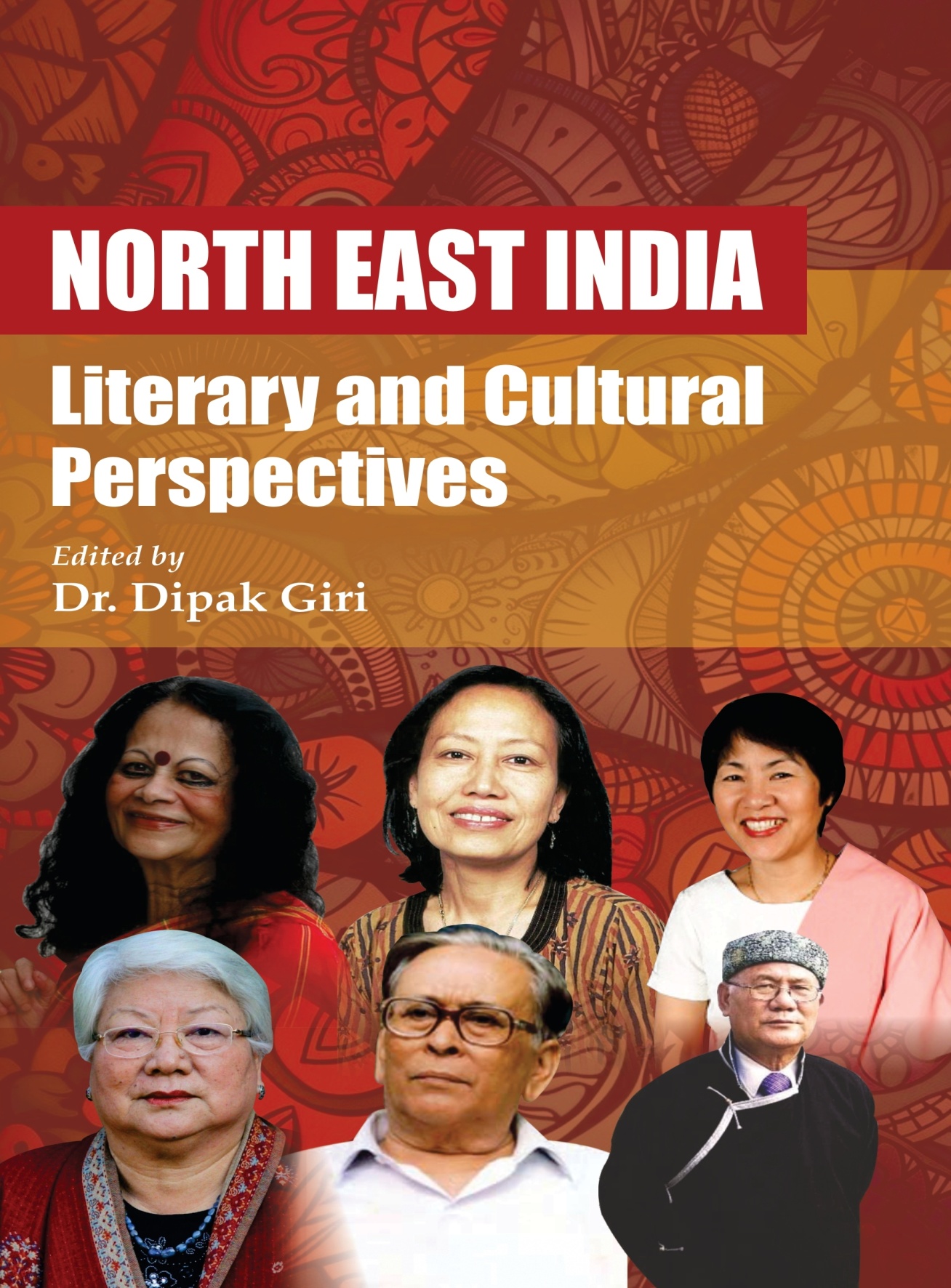
North East India: Literary and Cultural Perspectives | Non-fiction |
Dr. Dipak Giri (Ed.) | New Delhi: Malik & Sons Publishers & Distributors (2025) | ISBN: 978-93-92459-60-3 | Pp 317 | ₹1290
Mapping Northeast India’s Literary and Cultural Landscape
Dr. Dipak Giri in his edited book North East India: Literary and Cultural Perspectives offers a comprehensive and insightful study of Northeast India. The book is voluminous in size and rich in content with twenty-eight well researched chapters. The book allows the readers to engage with Northeast India’s cultural and literary practices, “populated with countless tribes, ethnic groups and communities” (p. xi). It not only clears the understanding of Northeast India’s literature but also explores various sides of this region’s culture, like food, education, language, rituals and many other practices. Dr. Giri, in crafting this book, plays the role of not only an editor but also of a cultural cartographer in general terms. It is evidenced by the introduction section of the book where he takes the readers on a journey of North East Indian culture and practices.
The introduction explores the unity in diversity found in the place which is home to various ethnic groups and dialects. The editor notes that the region’s unique sense of literature and style has been “given little space in academic writings in comparison to other regions of our country” (p. xxi), and his aim is to reverse this marginalization done throughout history. Dr. Giri remarks, “This book is much-needed… I am hopeful that it would break many new grounds and also help people pursue further studies on this region” (p. xxi). This compilation reclaims intellectual territory for Northeast Indian voices that have historically been silenced or misunderstood in national discourse.
The first paper of the volume focuses on Dr. Jitendra B. Patil’s ecocriticism of four short stories from The Oxford Anthology of Writings from North-East India. Dr. Alaghari Ramesh Babu investigates Indira Goswami’s resistance to social evils. Dr. Manisha Rathod examines ancient Sanskrit and Puran with reference to Northeast India. Dr. Raf Raf Shakil Ansari’s study of Easterine Kire’s Bitter Wormwood speaks about the generational trauma. Dr. Batskhem Mawlein explores the historical burden of the term “tribe,” which leads to different kinds of bias regarding them. A sociological criticism is done by Dr. Kanwalpreet Kaur who investigates racial bias against Manipuri students in Chandigarh. Nandini Banerjee and Susmita Rakshit capture Assam as a hub of multiculturalism which is rich in cultural practices such as Bihu. Many chapters focus on the uniqueness of indigenous customs and lifestyle. Avishikta Paul and Nibedita Ghow dive into the details of rituals like Moatsu, Tsungremong, and Jhoom cultivation and their significance with relation to the contemporary Sustainable Development Goals. A discussion on variety of foods is also done in Sanghamitra Ghatak’s study of Bhaskar Hazarika’s film Aamis deserving special mention- “Not just the raw materials but the style of preparing food, the spices used in creating a dish and the consumption technique are all region-specific.” (p.125) Pratik Chakrabarti’s study of Mamang Dai’s The Black Hill views it from postcolonial lens. Dai’s use of myths in narratives is explored in Malabika Sinha’s and Ankan Biswas’s analysis of The Legends of Pensam. Harshita Shukla writes on the presence of supernatural in that novel, also taking into account the theme of identity preservation. Subrata Barman and Virginia Kashyap analyze women characters in Chetan Raj Shrestha’s and Bhabendra Nath Saikia’s works respectively. Indira Goswami’s women protagonists have been studied by Mayuri Pathak and Dharmita Tripura, portraying their struggles and resistance. Temsula Ao and Malsawmi Jacob have analyzed the impact of war and trauma. Other contributions include studies on Tiwa tribe ethnography, Ahom dynasty rituals, and Tripura’s culinary heritage. Joykrishna Mukherjee gives an ecocritical analysis of Mamang Dai’s symbols of river establishing its connection with migration and survival instincts.The anthology concludes with an insightful interview by Dr. Dipak Giri, the editor of the book with Easterine Kire, the winner of the Sahitya Akademi Awards in 2024 for her novel Spirit Nights, reflecting upon her own life, inspiration and process of writing, realities and expectations of life in North East India.
The book articulates voices and views from Northeast Indian states which are often ignored and thus aims at instilling a pluralistic Indian identity true to its form, devoid of any stereotypes and biases. It talks about themes which are realistic and expressions which are universal. It also emphasizes ecocritical reading and raises issues of indigenous communities for example, Dr. Jitendra B. Patil’s analysis of stories like The Forest Guard and The Hunter’s Story which talk about the ecological ethics and indigenousness. “The story (‘The Forest Guard’) acquaints the readers with environmental concerns on the part of its protagonist - Gomseng who wants to redeem the sin of his previous part of life as an amateur hunter when he killed a doe on his spinster hunting expedition” (p. 3). Dr. Alaghari Ramesh Babu writes on Indira Goswami to highlight the theme of feminism and social justice in her works. Papers on Easterine Kire’s Bitter Wormwood, Mamang Dai’s The Black Hill, and Malsawmi Jacob’s Zorami investigate identity conflicts amidst the confusion of violence, trauma, and colonization. Dr. Raf Raf Shakil Ansari notes that these works show “the emotional and physical toll inflicted upon the Nagas” and other marginalized communities (p. xii). Chapters like Yaiphabi and Dr. Pallavi Thakur’s study on These Hills Called Home by Temsula Ao which says “The sociopolitical realities of the Naga people, particularly the intricacies of identity, culture, and conflict in an area characterized by insurgency and continuous battles for self-determination, are deeply reflected in Ao’s work.” (p. 227) Judith Vanlalnghaki’s analysis of Zorami: A Redemption Song by Malsawmi Jacob brings out how gender, ethnicity, and conflict intersect in Northeast India. These essays analyze how Naga women face and resist patriarchy and militarization. Pratik Chakrabarti’s reading of Mamang Dai’s The Black Hill offers a postcolonial reading on colonization and resistance of the ethnic groups and tribes in Assam. It also reflects on the physical and mental effects of colonization - “Kajinsha is falsely implicated in the murder of the priest and is executed by the British authority... thus leading to Gimur losing her sanity for the rest of her life” (p. xv).
North East India: Literary and Cultural Perspectives, curated by Dr. Dipak Giri, is a significant anthology that brings to light the literary and cultural practices specific to North East India. It also discusses the representations, the biases and the writing style specific to them. This is an area which has not been covered too well by the mainstream literary canon. Hence, this book enables the readers to comprehend this space and pave way to more research. With scholars from different regions and expertise, study on variety of texts, this book is sure to impress and inform the readers.
This volume goes beyond literature only and is exposed to multiple disciplines such as history, psychology, sociology, ethnography, politics, gender representations and much more. It expands the sphere of knowledge geographically as well as epistemologically to offer variety of modes of knowledge which are rooted in indigenous, oral and ecological systems.

Issue 126 (Mar-Apr 2026)
-
EDITORIAL
- Sunaina Jain: EDITORIAL
-
REVIEWS
- Akanksha Pandey: North East India: Literary and Cultural Perspectives Edited by Dr. Dipak Giri
- Ashmita Nayak: ‘Cracks in the Wall’ by Neera Kashyap
- Atreya Sarma U: ‘A Certain Penance of Light’ by Debasish Lahiri
- Atreya Sarma U: ‘Kiriti Sengupta—Selected Poems’ selected by Dustin Pickering
- D Sreejith Kadiyakkol: ‘Volume Three —A Modern History of Jammu and Kashmir—The Times of Turbulence (1975-2021)’ by Harbans Singh
- Namrata Pathania: Black Magic of Women from the Mountains: Poetry from Himachal Pradesh by Kamayani Vashisht and Shelly Bhoil
- Rupalee Burke: ‘A Poet’s Promise’ by Rositta Joseph
- Sanjukta Dasgupta: Selected Poems Gopal Lahiri, selected by Sanjeev Sethi
- Sunaina Jain: The Liar Among us by Bishhal Paul