Madhulika Ghose
Madhulika Ghose
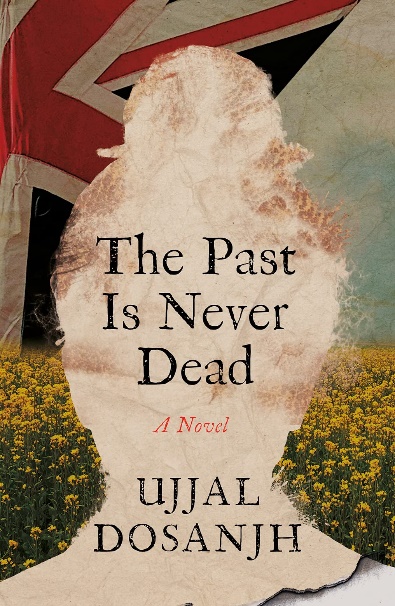
The Past Is Never Dead : A Novel | Fiction ¦ Ujjal Dosanjh |
Speaking Tiger Books (2023) | ISBN: 978-93-5447-4 95 - 8 |
Softback | pp 254 | Rs. 499
A poignant human journey
The Past Is Never Dead: A Novel is a tale of the triumph of the human soul, which soars and flies in wild abandon, breaking free from century-old shackles of societal conditioning. This paperback narrates a story that tugs at the heartstrings and inspires one to think beyond accepted conventions and judge what is black or white, true, or untrue, acceptable, or unacceptable for oneself. This is the story of an Indian family belonging to the Chamar caste, who settled in England during the Indian struggle for independence, to escape from the clutches of the caste system in erstwhile Indian society. However, despite relocating miles away from their motherland, the dark shadow of caste discrimination followed them all the way from Banjhan, a small village in Punjab, to Bedford in England. There, they faced insults and ignominy from the same vicious demon that they had tried to evade. Finally, despite intense trials and tribulations, the family not only survived but also inspired many others to fight against the oppressive caste system.
The story begins with a description of the life of Udham Singh (Udho), his wife Banti, and their son Kalu in Banjhan, a small village in Punjab. Being a Chamar family, they were either completely ignored or brutally tormented by people of the upper castes, without any reason. Traditionally the skinners of dead cattle, the mere existence of Chamars was repulsive to those of the upper castes, such as Zamindars. Interestingly, despite all the villagers following the tenets of Sikhism (which promotes equality), caste discrimination was rampant in the village. After being wrongfully accused and beaten mercilessly for stealing an ox from the zamindar, Udho was prevented from participating in a rally in support of the Quit India Movement due to his caste. Unable to bear the constant torment, Udho bribed some officials to buy a fake passport and escaped to England. There, after several odd jobs, he worked as a manual labourer at the Britannia Iron and Steel Works. For the job, he shaved his beard and removed his turban, giving up the symbols of his religion to gain something much bigger, self-respect. During his initial days in England, he lived with a few other Punjabis in a shared accommodation, where they took turns cleaning and cooking. An upper-caste co-tenant, who initially refused to share the room with Udho, later got on very well with him. Surprisingly, Udho’s “heart was delighted” to cook for his Brahmin co-tenant. This indicates the deep-rooted nature of the caste system. The perpetrator and victim both believe in it equally; this feeds the monster, enabling it to burgeon uncontrollably. After saving money, Udho brought his son Kalu and wife Banti to England, to make it their new home. Eager to provide Kalu with a college education and provide him better opportunities than he had ever received, Udho took his son to the library, encouraged him to study and communicate in English, and enrolled him in a college. Initially uninterested, Kalu finally realized that the world of education could open new doors for him, which would otherwise remain firmly shut. He studied diligently, made several friends and enemies, fell in and out of love, and grew up to be an opinionated man with broad views. He realized that the caste system was very much present among the Punjabi immigrants in England; moreover, racism was a burning issue among the British. After getting into numerous fistfights at the King’s Arms pub over racist and casteist remarks, he finally decided to change his approach towards these disillusioned people. Realizing the futility of violence, and the ease with which it could be used to frame false charges, he chose the path of non-violence and education. He married a like-minded student of medicine, Simran Johal, whose parents were both medical doctors and Jats (people of the upper caste).
Kalu, a professor in the history department of Durham University, Simran, a practising doctor, and their baby boy, Angad, were leading a happy life with Udho and Banti when misfortune struck. The unimaginably horrifying events that occurred could be attributed to the omnipresent evil, the caste system. Without accepting defeat, Kalu forged ahead, wrestling against the evils of society.
This story, other than being an interesting narrative, highlights some very interesting aspects of the human mind and its impressionable nature. The change in the attitude of Amrit (Simran’s father) towards his daughter and her marriage to a man of a lower caste could be almost completely attributed to his frequent interactions with radical members of his community. Moreover, the happy subservience of Banti (Udho’s wife) and Sureet (Simran’s mother) to their husbands, despite the faults and foibles of the men, indicates a deep-rooted gender inequality. Despite being a doctor herself, Sureet is voiceless in front of her husband Amrit. The next-generation wife, Simran, who grew up in England, is very different from these women, and the husband-wife dynamics of Kalu and Simran are also pleasantly different from those of their parents.
This book is an ode to the human spirit that fights against all odds, to finally emerge victorious. Although everyone is unique, we are all bound by the common chord of humanity, and each one of us has the potential to stand up for what is humane. Discriminating and humiliating people for reasons beyond their control, such as caste and gender, is inhuman and unfair. Although the name of this book is inspired by a quote by William Faulkner and represents a societal evil that has trickled down from the past, it ends with new hope for an egalitarian future, with equal opportunities for all. I would not classify this novel as light reading, but I would recommend it to all avid book readers.


Issue 108 (Mar-Apr 2023)
-
EDITORIAL
- Sukanya Saha: The Foreword…
-
BOOK REVIEWS
- Ananya Sarkar: “The Monkey’s Wound and Other Stories” by Hajra Mazroor
- Apala Dasgupta Barat: “Siddhartha: The Boy Who Became The Buddha” by Advait Kottary
- Ketaki Datta: “Helen -The Making of a Bollywood H-Bomb” by Jerry Pinto
- Madhulika Ghose: “The Past Is Never Dead – A Novel” by Ujjal Dosanjh
- Pinaki Gayen: “Mountain Temples & Temple Mountains - Architecture, Religion, and Nature in the Central Himalayas” by Nachiket Chanchani
- Pushpa Subramanian: “Japanese Management, Indian Resistance: The Struggles of the Maruti Suzuki Workers” by Anjali Deshpande & Nandita Haksar
- Semeen Ali: “NaCoHus” by Purushottam Agrawal
- Sunaina Jain: “The Kumbh Conspiracy” by Shubira Prasad