Darsha Jani
Darsha Jani
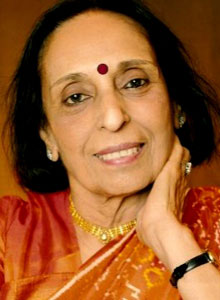
Panna Naik. Image credit- pannanaik.com
Introduction
A resident of America since 1960, Panna Naik was born in 1933 in the city of Mumbai. She established her identity as an eminent American Gujarati diasporic writer on account of her significant contribution to Gujarati literature. For more than two decades, she taught Gujarati in her capacity as Adjunct Professor at the University of Pennsylvania to second generation Indian Americans. She has written path breaking poetry, poignant essays and awe inspiring short stories centred chiefly around Indian American women. She has published eight volumes of Gujarati poetry and also translated Gujarati poetry into English. She has to her credit eight collections of poetry namely: Pravesh (1975), Philadelphia (1981), Nisbat (1984), Arasparas (1989), Aavan Javan (1991), Rang Jharukhe (2004), Cherry Blossom (2004) and Attar Akshar (2010) in which she expressed the agony of her unfulfilled motherhood and the dissatisfaction with contemporary life. Her simple yet bold style of writing has fascinated the readers of the 21st century. Her poems express the inner agony of woman, who is forced to adjust in a world that is devoid of warmth, true love and compassion.
Panna effectively uses a nonmetric style of poetry. Her poems are the repository of women's bold attitude towards the world; they exhibit her inner desire to live liberally like men. Her poems do not depict hypocritical stances of women; on the contrary, they express open, independent and audacious bearing of women. Panna emphasises the inner happiness of women; her wish to attain perfection; her search for contentment even in the midst of a close knit family structure.
Panna is pivotal in dealing with feminine issues related to nostalgia, homesickness, alienation and the inner environment of female mind battling to find expression. Her poems are the reflection of diasporic women struggling for attaining mental peace and striving to get inner satisfaction irrespective of the family bondage she is compelled to resist. Panna emphasises the fact that the modern gadgets of communication prove miserably ineffective in diminishing the wide gulf created between the couples who live frosty life centred on their own selves. It is noteworthy that some of the poems of Panna are purely subjective; they reveal her own pain and dejection, her personal agonies and discontentment.
Panna divulges the intense desire of the feminine heart to lead a life of her own choice even in an unknown country. She lays bare her heart while talking about the dreary life of an Indian American woman craving for the company of a loving heart and longing for togetherness which, in spite of several efforts, she fails to acquire. Her poems bring to light the desire of fulfillment of the feminine aspirations and the hurdles in accomplishing her dreams. Her poems are the true revelation of her own heart wishing to impart equal status to woman as that of man so that she can also live her life with her head held high.
Agony of Displacement
Panna's poetry reveals the uneasiness and distress of a woman trapped in the circumstances she cannot alter. In spite of all the modes of luxuries and modern life style, the inner passion of a woman remains disgruntled and she feels alien in the newly created environment. The following poem The Living Room reveals her agonised state of mind:
I reorganise my living room
asking each piece
where it would like to be placed.
I give a new spot to the sofa and the lamp,
change the drapes, and
replace the old rug with a wall-to-wall carpet.
The living room with its new décor
looks precise and proper.
When everything is thus in place
I begin to wonder!
where among these things
should I place myself?
Panna finds herself a lonely, alienated and disoriented person living aimlessly in a vast, limitless titanic world. Panna craves for that warmth in Philadelphia which she experienced in India in the company of a joint family comprising of more than twenty five members. The natural environment of America does not console the craving heart of Panna as the flowers of Dahlia, Gulmohar, Ratrani, Champa, Chameli, Parijat, Borsali, kevdo and Mogro (Jasmine) are missing in Philadelphia. They are replaced by other flowers like Mapel, daffodils, tulips, petunia and impatience. But they do not satisfy the yearning heart of Panna for the lack of intoxicating aroma found in the flowers of Mother India.
Bold Expression of Feminine Heart
Panna's anthologies of poetry - Philadelphia [1980] and Nisbat [1988] are the outburst of her own heart where she strikes a chord of dissatisfied married life she has been leading in America. Her poems are the expression of a feminine heart that bleeds continually and does not find solace anywhere. Her discontented state of heart is well expressed in the poem Ceiling:
Lying in bed
staring at the ceiling
I felt like reaching out:
it seemed so close.
After an unsuccessful attempt,
I put chair upon chair upon chair
on my bed, stood atop this pyramid
like an acrobat
but still could not touch the surface
that had seemed so close.
I cannot figure out
whether the ceiling is much too high
or my arms much too short.
Desire for Equality, Dignity and Identity of a Woman
Panna advocates the need of equality, dignity and honour due to women. She feels that women should be treated with love, care and concern so that they too feel respected and enjoy their being. Many of Panna's poems are subjective in which she has revealed the stress she has undergone in her married life. She has expressed her own pain and gloominess, her torment and discontentment of her unfulfilled motherhood in them. The poems express her own state of mind battling to solve the conundrums of life but feels frustrated as they appear too byzantine to be deciphered. Panna yearns for the respect she deserves being a woman, but her feelings and passions are crushed under the dominance of male ego. She boldly gives expression to her thoughts in the following poem "Debt"
You and I
two separate bodies
but a single soul –
a million efforts have been made
to see this ideal come alive
but somehow deep somewhere
rings a perennial echo
of separateness
of each other's non-acceptance.
We are nothing else –
just two pages of a book
facing each other
bound but separate
just sewn together by predestined debts
of mortal ties
Panna's poem "Ame To Sathe Toya Ajanya" (We are Together Yet Strangers) (81) expresses her deep rooted frustration where she vents out her failure in deciphering the riddle called love and asks a question as to why is her husband and she feel like strangers in spite of being together. She admits that she has tried her best to make their lives meaningful but could not succeed. They, therefore, wear a veil of a happily married couple in front of others to save themselves from the dishonour in society. Panna's poem Sweater also depicts her mental state in which she asserts that her husband and she are designed from different textures of wool; she, therefore, longs to redesign the sweater without impairing the sheen of the original texture. Another poem Maru Sharir (My Body) presents the intense agony of her dreary married life; she describes the scene of her bedroom where her husband seem to her an outsider and she is forced to undergo physical torture that her husband calls "love". She explains how she tries to get up from the bed so often but of no avail; her body hurls down on the insipid bed. (55) Her poem Toya (Still) is an irony as it depicts an incident when Panna was single; she performed Gauri Vrat as per the instructions of her mother; wore mehandi on her hands, kept fast for five days, watered the auspicious Tulsi plant, offered diya and prayed to God to bless her with a good husband. Yet she is not in a position to understand, why is her bedroom engulfed in flames? (53) Through the poem, Panna talks about her discontented married life she passed with her husband which was more of a burden rather happiness.
Conclusion
Evaluating Panna from the feminist point of view, it could be said that by depicting her own experiences, she wishes to express her desire that all women must be treated with dignity and honour by men. Women wish to be loved, cared and considered equal by their male counterparts. Today there are groups of men who regard women as able, competent and equal to them, yet it is a long way when the mind-set of male dominating society could be completely altered. There are many instances when the couple that appears to be "made for each other" outwardly is inherently hollow and shattered.
Women Empowerment propounded by Panna does not offer the alteration in the existing structure of society. Women do take care of their family members and children, but the only thing they expect is their recognition by their loved ones. There are instances when women are forced to wear the mask of contentment, satisfaction and fulfilment when the reality is just the contrary. In the plea of attaining happiness, they try new ways. The environment, incidents and circumstances narrated by Panna in her poems acquaints the reader of the dependency of American Indian diasporic women on men. The women adjust themselves in the new environment and adopt the norms and principles prevalent in the society. But they find themselves surrounded by emotionally detached partners who do not appreciate the pain of their agonised hearts and leave them to suffer alone. To conclude, the time is ripe when an environment is created where women can make independent decisions as well as acknowledged as equals in society. This can only happen if there is a systematic channelised route for the empowerment of women and men are an integral part of this positive and much needed change in the society.
Bibliography:
Jani, Balvant, ed. Panna Nayak Nu Diaspora Sahityavishwa (An Anthology of Panna Nayak's Gujarati Diaspora Literature). Parshva Publication, Ahmedabad, 2012. Print.
Naik, Panna. Collected Poems, The Living Room, Translated into English. Penn Current, University of Pennsylvania. May3, 2001.
Two poems by Panna Naik, Debt and Ceiling. Translated from Gujarati by the author and Saleem Peeradina. World Literature Today (Sat, 01 Jan 2011)
**********


Issue 65 (Jan-Feb 2016)
-
Conversations
- Geet Chaturvedi: In Conversation with Amrita Bera
- Mona Dash: In Conversation with Jaydeep Sarangi
-
Literary Articles
- Charanjeet Kaur: Gulzar – The Poet-Filmmaker
- Darsha Jani: Panna Naik
- Indu Prabha: Female Quest for Identity
- Pradip Mondal: The ‘New Woman’ in India
- Shikha: Meena Kandaswamy’s Ms Militancy
- Sreenath V S: Mayyazhi’s Colonial Past